Teaching your child to read

I can clearly remember, when Prince was about 2 years old, watching a 5 year old daughter of a friend reading a book, and feeling suddenly very daunted at the idea of teaching my children to read. It seemed such a huge thing, and so difficult. Even though Prince could already tell you the phonic sounds of all the letters of the alphabet, and their names, reading still seemed such a distant and impossible achievement. Yet now, at 6 years old, Prince can easily read just about any book he cares to pick up.

For those of you who are considering home education and might be feeling the same daunting fear that I once felt, I want to encourage you: the path from then to now was easy – and I am no qualified teacher! Here are some things we have done to get to where we are today.

  1. From early on we introduced letters and their sounds in play. One of my favourite toys was foam alphabet letters for the bath. We found these useful for reinforcing the shape and sound of letters, as well as associating letters with fun – Prince particularly enjoyed using the letters to build up shapes of vehicles and buildings!  The other toy which really helped with learning letter sounds and names was a toy bus we borrowed from a relative. Prince would press the buttons and copy the sounds, all of his own accord, and learnt a lot in this way.
  2. Once Prince knew the basic sounds, I introduced two letter sounds like ‘sh’, ‘ch’, ‘ee’ etc.  I looked at the Jolly Phonics guidelines for which sounds were best to introduce at what stages. I printed out a chart which I put up for Prince to see everyday, and I also just talked about them as we came across them in our everyday life. For example, if we were reading a book and the word ‘food’ came up, I might say, “Look, Prince – F-OO-D.  See how these two ‘o’s’ make an ‘oo’ sound when you put them together?”
  3. We also began blending sounds to make words from early on. As soon as he knew the sounds for ‘c’,’a’ and ‘t’, for example, I would show him how they can be put together – slowly at first, then faster until he could hear the word ‘cat’. I didn’t do this formally, but simply as opportunities presented themselves through every day life. When you take time to see it, you notice that we are surrounded by words everywhere; walking through the mall can be a phonics lesson! Again, we also had toys which helped teach blending, spelling and reading, such as a Jolly Phonic’s puzzle, and a Melissa & Doug ‘See and Spell’ board.
  4. Enjoying books together.

    When I thought he was ready, I introduced Prince to the first ‘Jolly readers‘ books.  In retrospect I think I did this a bit too early, and I did find that I had to take a break and restart again later on (we first started these when he was four).  I think the ideal time to progress onto the next level is when the child is showing an interest, and this progress should be a natural flow, rather than a segmented step up.

  5. When Prince was five we made our way through the next level of Jolly readers, and began the third level. By this time his reading had improved, but the requirement to read for an hour everyday (this was about how long it took him to get through a level three book) was too much. Although he didn’t put up much of a fuss, I could see that the task was too hard for him, and as such was affecting his enjoyment of books in general. At this point I decided to take a break from any set reading schedule, and just let him do what he wanted with his time for a while.
  6. Since then I have not gone back to any form of ‘teaching’ reading, and it has been during this time that his reading has improved most dramatically! It took a little while – a few months – but I found that he started to enjoy reading so much more once the pressure to learn was taken off of him. And because he enjoyed it, he worked at it. He figured things out, asked questions and persevered until he could read the books he wanted to read. As his ability continues to increase, he stretches himself further and further, and so progresses without me needing to do anything more than simply answer questions like ‘what does that say?’ What could be easier than this?!
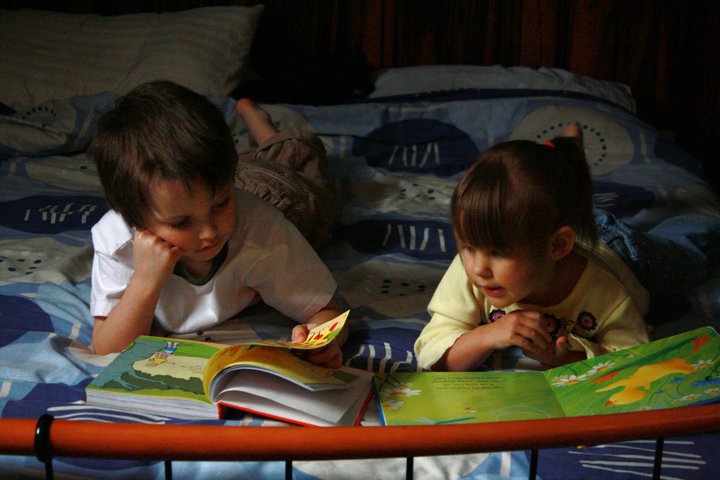
Overall, the single most important piece of advice I would give in teaching your child to read, is to enjoy books as a family. Enjoy them together, encourage them to value books of their own, let them see you reading, read out loud, create special reading times. Because out of enjoyment, comes learning.

Prince still has a lot to learn, of course – he is only six! But I am confident that he will pick up what he needs to know as we go through life together, taking opportunities to learn as they present themselves, and enjoying the process of reading for pleasure.
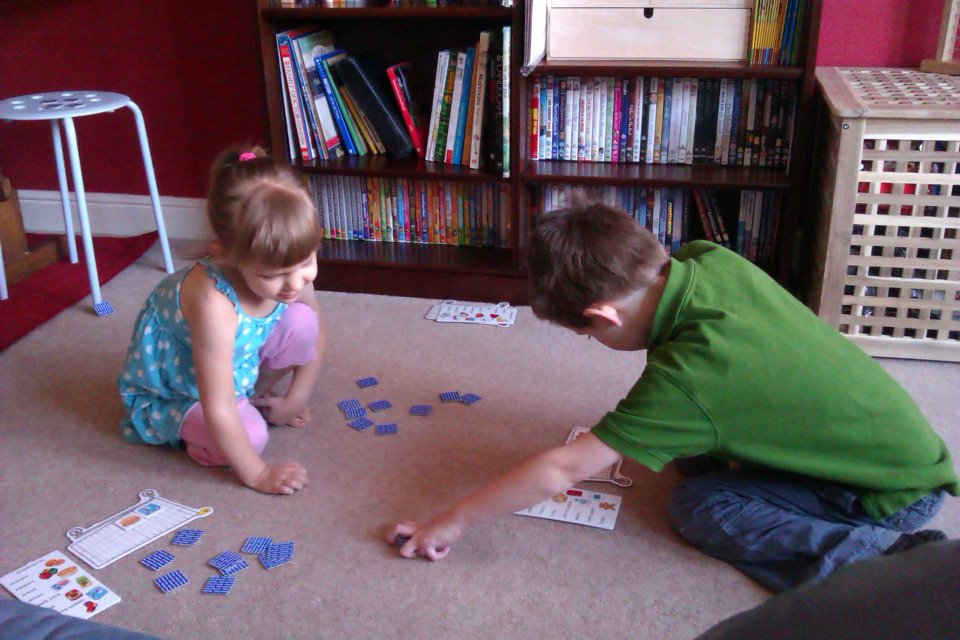
Putting the fun back into school

As part of our natural learning approach to homeschooling, most of our ‘schooling’ comes in the form of fun activities. Because of this, games and stories are major contributors to the education of our children. Here are some ways we incorporate learning through these mediums at our house.

Fun Games

  • Orchard Games has a lovely range of good quality games designed to help young children learn different concepts.  Some that we have and enjoy are:
    • Shopping List – builds memory and can be used to talk about life skills to do with shopping.
    • Ladybirds – excellent game for early counting and adding skills (we have also used it to talk about multiplication, patterns and art, with a bit of creativity!)
    • Tell the Time – really nice game for learning to tell time in both digital and analogue.
  • Time Bingo by Learning Resources is another great game for learning analogue time telling in 1/2 and 1/4 hour increments.
  • Boggle, Scrabble, Scattergories and other adult games can also be used with children. Prince especially loves playing simpler versions of these games with us, and they provide opportunities to improve writing and spelling skills.
  • One game we are about to start using is ‘top trumps’. Prince turns 6 this week, and we have ordered him this ocean creatures version for his birthday. I anticipate this being a great fun way to learn and memorise facts about ocean animals, and there are many other versions available on a wide range of topics that could also be useful learning tools.
  • Living Water Bible Games and Online Maths Tutor are two websites (created and run by my Mom!) which have a great range of games that can be used to teach lessons on these two topic respectively.
  • Some games can also be played when you are out and about, either walking or in the car.
    • ‘Bus Stops’ is a game my family made up when my brothers and I were little, and now we adapt for our own kids. The idea is to get as many points as you can by spotting various things on your journey. The point system is as follows: bus stops = 1, buses = 2, double-decker buses = 3, Volkswagen camper vans = 4. Playing this game has significantly improved Prince’s mental arithmetic skills, due to the Very Great Importance of keeping track of one’s score, and attempting to beat one’s Daddy.
    • I Spy has been a great favourite with our kids for a while, and they have learnt a lot about spelling and phonetics by playing this over the years.

Playing ‘Shopping List’

Fun stories

  • At the moment Prince’s interest has been captured by Usborne’s phonic reader stories. We have the complete collection all in one book. Now, this a pretty thick book, and though Prince is really getting into reading now, I was still somewhat surprised when he picked up the book for the first time, and read all the way through 11 out of the 12 stories yesterday! I was yet more surprised when today, he asked for the book again and read all the way through the whole thing! I asked him what he liked about these stories, and he said, “I like them because there is a pirate one, which is called Big Pig on a Dig. And Ted in a Red Bed is a very nice one. I like all of them, Mommy.”
  • Another fun way to learn about all kinds of topics is through what Charlotte Mason calls ‘living books’. This simply means books which have been written about one topic, by an author who has an obvious passion for their subject. I like the definition given here:

“Living books are usually written by one person who has a passion for the subject and writes in conversational or narrative style. The books pull you into the subject and involve your emotions, so it’s easy to remember the events and facts. Living books make the subject “come alive.” They can be contrasted to dry writing, like what is found in most encyclopedias or textbooks, which basically lists informational facts in summary form. You might be surprised to find that living books are available for most school subjects — even math, geography, and science!”

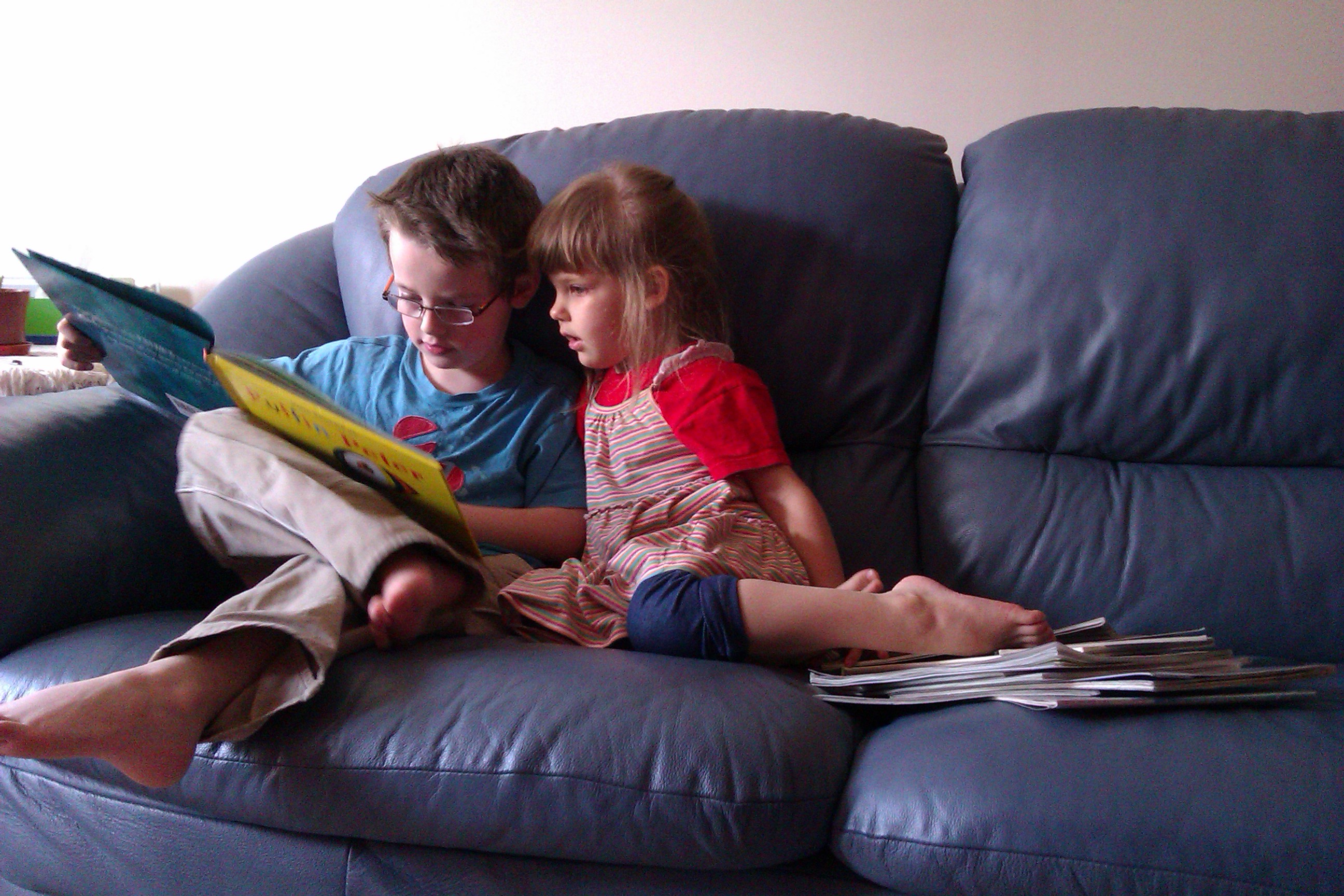
Reading through Usborne’s phonic reader stories.

I am sure that there are endless ways to have fun and learn at the same time – you just need a little creativity, a love for fun and an eye for opportunities. What fun opportunities do you and your kids enjoy?

All things bright and beautiful

Yesterday the kids and I went with some of our homeschool friends to the Natural History Museum in Tring. It was incredible! If ever you need a reminder of the awesomeness of creation, this is a great place to go. By the end of the day I had a renewed appreciation of the beauty and wonder God has put into the world, and of His majesty and power.

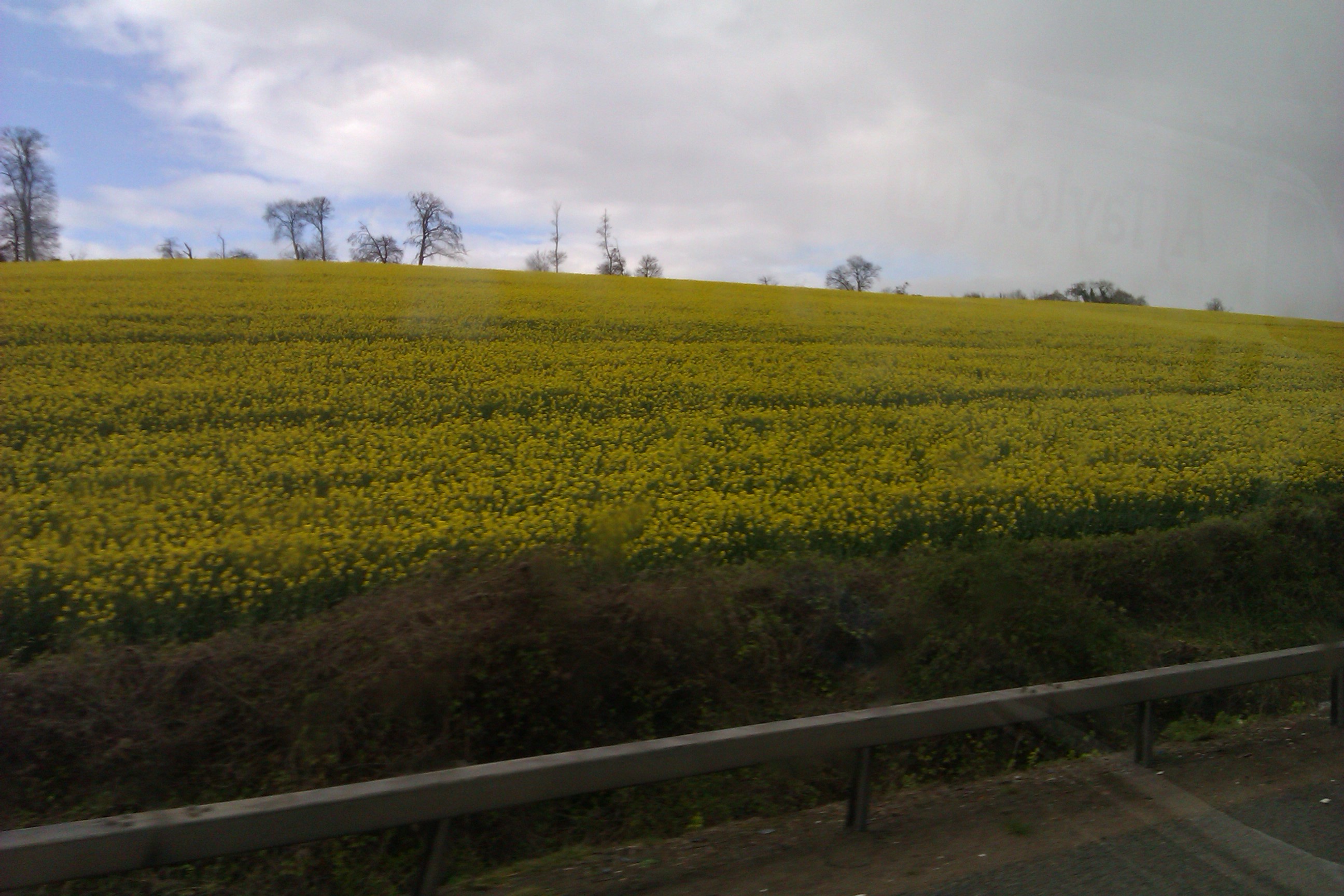
The green field - I caught it on camera on the way back home.

Tring is about just over an hour away from us, but due to rain and road works the journey took us two hours to get there. It was a pretty grey day, and I was looking out the wet windows as we drove along the motorway, not seeing anything of particular interest. Suddenly, as we rounded a curve in the road, a gorgeous bright yellow-green field came into view. It took my breath away! I was awed by the simple beauty of the crop, as it stood out bold and cheerful though dull, damp air. Wow – God can sure paint a scene!

The view across the hills as we left the motorway.

As we drew nearer to Tring the weather cleared up a bit. The blue sky brightened the day as we turned off the main motorway and began to drive along the winding roads. The countryside here was soft and green, with rolling hills, grazing sheep, and dandelions providing spots of yellow colour. I wished I had time to stop and walk though it all, and really take it in. As it was I had to simply enjoy it as we whizzed past, and attempt some pictures with my HTC phone camera!

God is amazing!

By the time we arrived I already knew that I would have to share this wondrous beauty with you all today. Little did I know what was waiting inside to confirm that decision! The car park was tiny and subjected to construction work, and the building looked like it could hardly hold anything of value. I gathered a few of the kids while our driver kindly went to look for a parking space further afield, and we walked into the building. We were greeted by friendly people, who showed us where to buy some activity sheets for the children. After spending £1.50, gathering pencils and drawing boards, and checking I had the right number of kids with me, we entered the first gallery.  Wow.

I could have stayed in this gallery for hours. I think we did spend about 45 minutes there. It was a small room for a museum – hardly bigger than the square footage of my flat – but it was packed from floor to ceiling with animals. There were bears, wolves, gorillas, big cats and birds of all kinds. Up above we could also see glimpses of safari and ocean creatures, which we saw in more detail when we got upstairs to gallery three.

It’s hard to say what my favourite part of the museum was, but I can narrow it down to three top experiences:

  1. Seeing the incredible beauty of a huge variety of birds up close.  I  have never been particularly interested in birds, but I’ve been getting more taken with them as I get older. Yesterday upped my interest a lot!  There so many varieties, and all so beautifully and intricately designed.
  2. The delighted cries and amazed faces of the children.  From the moment we entered until we left the children were moving from display to display, calling out for us to look at each new amazing discovery. They loved being so close up to the animals, seeing what they really look like. They took time to learn new facts, compare and contrast species and draw their favourite creatures.
  3. The ocean gallery.  Prince is very into ocean creatures at the moment, and whenever he is passionate about a topic I find myself being drawn into it too. The coral, crabs and sharks were particular favourites of mine in this section.  There was such detail, beauty and power in these creatures.

We stopped for a yummy indoor picnic half way through our exploring, and then made our way around the last galleries in the museum. After browsing the gift shop (Prince bought a pen for drawing with his own money), and a last trip to the loo, we walked back to the car. It was parked down a little village street, opposite fields where a few handsome horses were grazing.  Just lovely.

In our bedtime prayers we all thanked God for the amazing day out, and for the creation which we were blessed with witnessing that day.

For since the creation of the world God’s invisible qualities—his eternal power and divine nature—have been clearly seen, being understood from what has been made, so that people are without excuse. Romans 1:20 (NIV)

Why we homeschool

Our family has made the choice to home education our children, rather than put them in the school system. Below is an outline of the ‘why’ behind our decision. This is certainly not an exhaustive list of our reasons for choosing to homeschool our kids. It is also not intended in any way to make others feel guilty for sending their kids to school. It’s simply an overview of some of the most important and outstanding reasons we believe that – for us – homeschooling is the option we must (and desire to) choose.

Spiritual Training.  Just as a solider training for war should go where he can be BEST trained, so we – training our kids for the spiritual war they will engage in as they grow – want to train them in the BEST possible place. In our opinion, this is not a school setting.  Why?  Because:

  1. We want to create an atmosphere where prayer, Bible study and unconditional love are a central part of their learning process, as we believe this creates a solid foundation for a life of love. (Deut 6:6-8)
  2. We want to be able to frequently and consistently show them how the Biblical principals of love, kindness and responsibility should influence thoughts and behaviour, and train them to make this a personal habit for life.  (Proverbs 22:6)
  3. We want them to be totally immersed in an atmosphere of love, acceptance, affirmation of who they are, and be the ones to provide consistent and loving discipline. At school we perceive that they will be too exposed to anger, bullying, discouragement and lack of discipline which can negatively impact character development.
  4. We want them to regularly observe adults and children who model love, integrity and diligence – characteristics we feel they should be aspiring too. Kids imitate what (and who) they see the most.
  5. We want them to be comparatively free from the long and daily peer pressure to conform to worldy standards. We want to control such exposure so they learn to love those they disagree with, rather than imitate them.

Academic excellence.  With ratio at almost always close to 1:1, we believe that education at home is far more likely to be of good quality than education at school. Even without formal teacher training we believe this is achievable. How?  Because:

  1. We can work hard at developing and maintaining a love for learning in our children. This (which is so easily and quickly lost in school settings) will help them to be life-long learners, and people who are diligent to search out whatever they need to know in the future.
  2. We are able to be very in tune with what subjects and topics each child enjoys, finds easy, or struggles with in some way. We can tailor their education to these strengths and weaknesses, moving ahead quickly when they excel, and taking the time needed when they would otherwise have struggled.
  3. We can focus on true understanding rather than test scores. Learning can be put into context and become meaningful, rather than abstract.  Long term learning is the goal.
  4. With the responsibility on our shoulders of educating our children, we tend to learn alongside them. This means that we are able to weave threads of learning easily through-out life as whole.  Learning becomes a natural part of life, not a 9am-3pm chore.  It also becomes a shared process of enjoyment and mutual encouragement.

Personal development.  There is no need to fear a lack of socialisation in homeschooled children – in fact the opposite may be true. Homeschooled kids are constantly around a variety of ages, and learn how to interact in everyday life, rather than the artificial situation which a class, year or grade makes up at school. With homeschool co-ops, clubs, music, art, swimming, church, camps, etc, there are no shortages of opportunities to socialise. But apart from this, there are other personal developmental benefits to homeschoolng:

  1. Self-discipline.  Opportunities to learn by one’s own initiative come up frequently in home education, and this promotes self-discipline, a huge benefit for life in the adult world.
  2. Problem solving.  While this can certainly be learnt at school, it may not be taught as specifically as we would like. We want to be around to teach loving and peaceful ways to solve both interpersonal and situational problems.
  3. Acceptance of others. Unlike the cliques which develop so easily in school settings, we can encourage children to play with, help and engage with people of all ages and abilities.
  4. Personal conviction.  Children should be free to question and challenge ideas and beliefs in an atmosphere of open-mindedness and honesty. We will not teach them just one view as right, to be taken as fact without question, but rather encourage them to examine and search out the evidence for themselves.  We will explain what we believe and why, and actively help our children to make their own decisions based on accurate interpretation of the available evidence.

Ultimately, we feel that God has given us (not teachers, day-care providers, babysitters or anyone else) the responsibility to bring our children up “in the training and admonition of the Lord” (Eph 6:4), and feel that we will best carry out that responsibility by educating our kids at home.  We believe that education at home can be first-class, and that the personal skills instilled will best prepare them to go into the world as loving, useful members of society.

Natural learning

As a homeschooling Mom, one of my greatest joys is watching my children learn new things. Right now we don’t follow any particular curriculum, have any set ‘school work’ for each day, or follow any term timetables. Instead, we are adopting a relaxed, holistic, natural learning method. Whilst there are merits with a classroom style approach to education, I believe that the best learning happens in every day life, as we pursue our interests and talents, as we master necessary skills, and as we encounter people with a passion for different topics. I think this is especially true for young children, who find it so hard to sit still and listen to lessons. As the kids get older I will re-evaluate our style, but for now natural learning is working for us.

So what does this natural learning method involve, and is it effective? The short answers are ‘a willing heart’ and ‘yes’. For the longer answers, read on 🙂

It’s hard to say what a ‘typical’ day looks like at our house, in terms of education, but here are some things that happen fairly often:

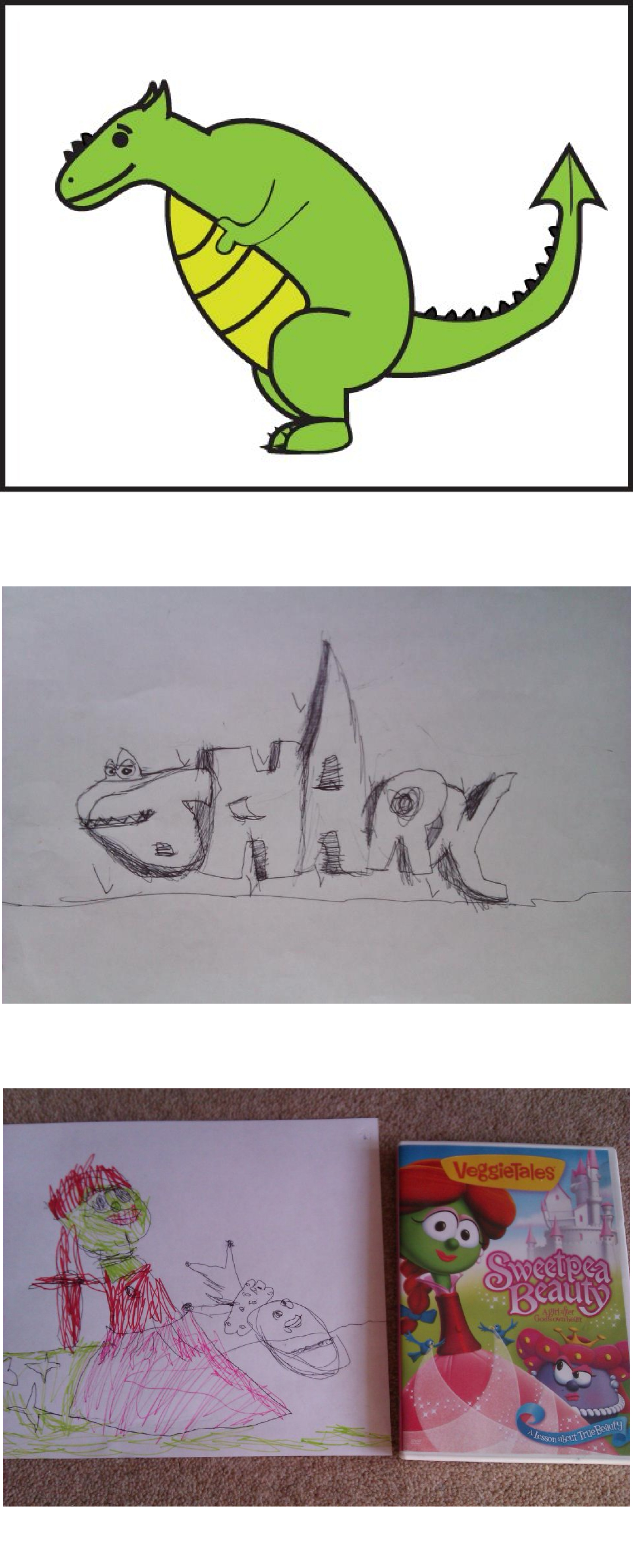
  • Top: a graphic design project Prince and I created
    Middle: ‘Shark’ from ‘WordWorld’, by Prince age 5
    Bottom: Copywork by Princess, age 3

    Reading.  All kinds of books are read in our house. So far today, for example, the kids have read (or listened to me read) ‘The Life of Jesus’, ‘Usborne First Illustrated Maths Dictionary‘, ‘The Story of the Olympics‘, various sections from ‘Animal Kingdom’, ‘The Big Dark’, ‘My Daddy is a Giant’ and ‘Lines and Squares’. Out of all these the only one I initiated was the poem, ‘Lines and Squares’. This reading has provided learning in the following ‘school’ topics: English (reading), religious education, maths, English literature, history and geography.

  • Drawing.  My kids are prolific drawers! They have usually drawn a few pictures each before I am even out of bed.  They take great care and devote a lot of time to their pictures. This, obviously, covers the topic of ‘art’, but we also find that their drawings inspires learning about other topics, such as geography. Today Prince also helped me create the graphics for his birthday invitation in Adobe Illustrator, which provided some ICT learning.
  • Dancing and music.  Princess especially likes to dance. She is inspired by her cousin, and also loves to choreograph her own dances and put on shows. We have a variety of classical music we love to listen to, and our favourites are Vivaldi, Mozart and Andrea Bocelli. With this we cover some P.E., music, and performing arts.
  • Questions and conversations.  Prince is at that inquisitive age, where it’s practically impossible to keep him from learning! He’s always asking questions about things, and having conversations with Daddy or me about topics which interest him. Sometimes we expand upon this by looking up more information in a reference book (our dictionary or atlas), or searching on the internet. A lot of educational topics are covered this way.
  • Writing.  Both kids like to make their own books, written and illustrated. Prince is developing quite a collection. They also write messages on their pictures, write out the ‘verse of the day’, and today Prince wrote out names on his birthday party invitations. We use these opportunities to learn spelling, grammar, handwriting, composition, creative writing, etc.

There are so many other opportunities that come up ever day – it’s impossible to even remember them all, let alone list them! We do field trips, cooking, painting, gardening, counting, telling the time, astronomy, patterns, imaginary play, construction, French, life skills, science, environmental awareness, health and nutrition, and much more.

In summary, natural learning is a fun, holistic approach to eduction. The key to making it work is, in my opinion, an open, willing mind and dedication. When we take time to see and take hold of the learning opportunities in every activity we can inspire our children to learn and seek out knowledge through their everyday life.

Story time = special times

One of the joys of parenting is reading to your children! As a child I was an avid reader, and it’s something I hope my kids will enjoy for the rest of their lives too. From a homeschooling perspective reading is a great activity, being useful for learning all kinds of skills. Reading to your child helps them appreciate literature and begin to learn to read themselves, as well as introduces new ideas, develops creativity and improves attention span. As your child begins to read alone the benefits continue, incorporating spelling, grammar, plot and thought development, rhythm, rhyme, confidence, speech, vocabulary, and much more!

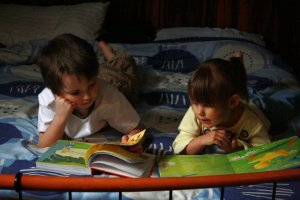
Prince reading a library book to Princess.

I haven’t always read with my kids as much as I wish I had, but we are making up for it now! The library is a very short walk down the road for us, which is such a blessing. We regularly go and read there, as well as bring a bag full of books back home. Prince is becoming quite a capable reader, and will often sit and look at the books alone. Princess, who admires her big brother no end, loves to sit with him and listen to him read. This is one of my favourite thing to watch!

Last week we started our first chapter book together – Charlotte’s Web. Princess finds it harder to sit for long, but Prince easily enjoys listening to me read two chapters each day. I love the quality of the language and the depth of the plot – it’s just right for their hungry intellect to soak up and learn from. It’s also a special time for us to be doing something together – almost like going on an adventure! The time we spend snuggled on the couch reading will be precious memories for me, and, I hope, for them.

As well as reading many children’s books written in rhyme, I like to include some classic poetry in our reading. We really enjoy A. A. Milne’s poems: When We Were Very Young and Now We Are Six. These have always had a special place in my heart, and have captured Prince’s interest from early on too. Some of our favourites from these are ‘Forgiven’, ‘Lines and Squares’, and ‘Sneezles’.

Prince’s illustrated ‘Lines and Squares’ print out.

A great place to go if you are looking for ideas for books to read to your children is Ambleside’s book lists. There is a whole curriculum on this website, but I like to use it as a place to find ideas. They usually recommend good quality products, so I don’t have to waste time reading through things myself first.

If you’re looking for a good resource to help your child learn to read I recommend the Jolly Phonics products. There are workbooks, reading books, teacher guides, activity guides, DVDs, games and more. You don’t have to follow it a specific way (although you can), but rather you can pick the bits you like best and mix them with your own ideas, and your child’s own needs, strengths and weaknesses.

Do you read to your children? They say it’s never too early to start, and they are right – I wish I had started earlier. But it’s also never too late! Find a lovely book, cuddle up with your kids and start reading 🙂

Newer entries »