Natural learning

As a homeschooling Mom, one of my greatest joys is watching my children learn new things. Right now we don’t follow any particular curriculum, have any set ‘school work’ for each day, or follow any term timetables. Instead, we are adopting a relaxed, holistic, natural learning method. Whilst there are merits with a classroom style approach to education, I believe that the best learning happens in every day life, as we pursue our interests and talents, as we master necessary skills, and as we encounter people with a passion for different topics. I think this is especially true for young children, who find it so hard to sit still and listen to lessons. As the kids get older I will re-evaluate our style, but for now natural learning is working for us.

So what does this natural learning method involve, and is it effective? The short answers are ‘a willing heart’ and ‘yes’. For the longer answers, read on 🙂

It’s hard to say what a ‘typical’ day looks like at our house, in terms of education, but here are some things that happen fairly often:

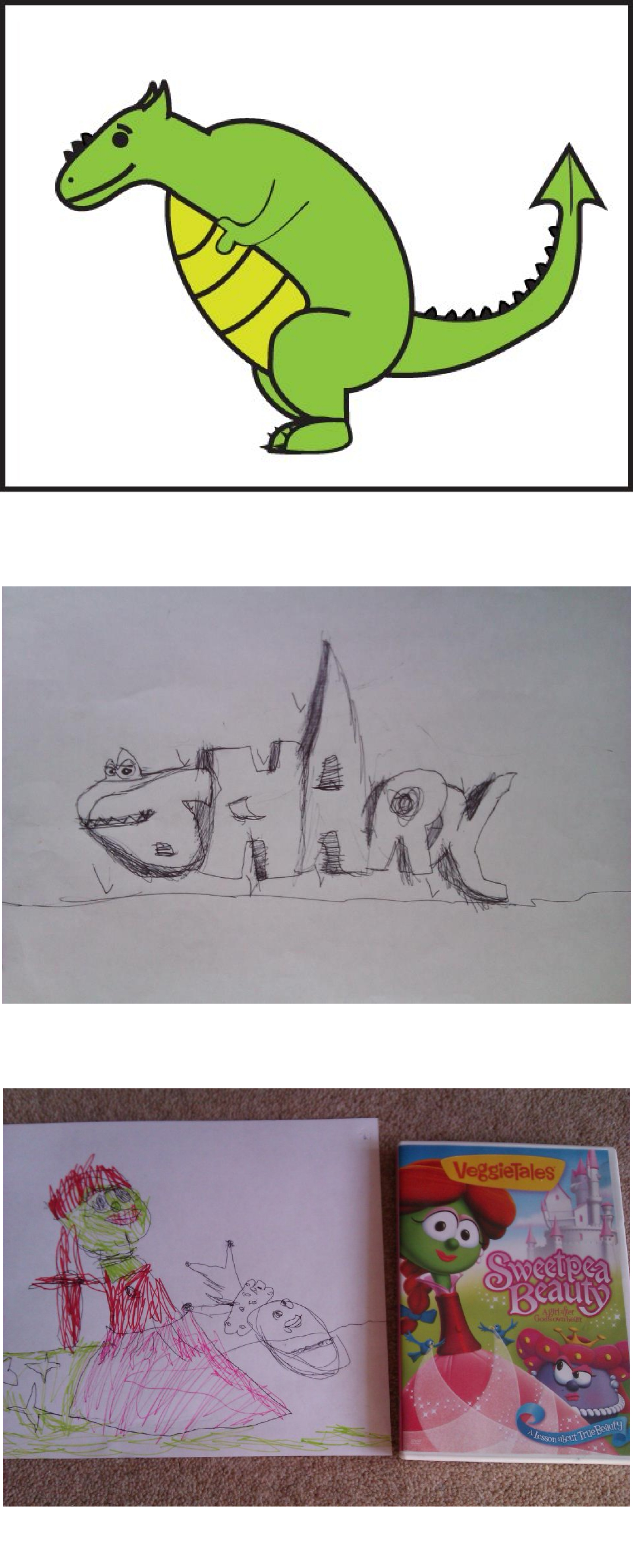
  • Top: a graphic design project Prince and I created
    Middle: ‘Shark’ from ‘WordWorld’, by Prince age 5
    Bottom: Copywork by Princess, age 3

    Reading.  All kinds of books are read in our house. So far today, for example, the kids have read (or listened to me read) ‘The Life of Jesus’, ‘Usborne First Illustrated Maths Dictionary‘, ‘The Story of the Olympics‘, various sections from ‘Animal Kingdom’, ‘The Big Dark’, ‘My Daddy is a Giant’ and ‘Lines and Squares’. Out of all these the only one I initiated was the poem, ‘Lines and Squares’. This reading has provided learning in the following ‘school’ topics: English (reading), religious education, maths, English literature, history and geography.

  • Drawing.  My kids are prolific drawers! They have usually drawn a few pictures each before I am even out of bed.  They take great care and devote a lot of time to their pictures. This, obviously, covers the topic of ‘art’, but we also find that their drawings inspires learning about other topics, such as geography. Today Prince also helped me create the graphics for his birthday invitation in Adobe Illustrator, which provided some ICT learning.
  • Dancing and music.  Princess especially likes to dance. She is inspired by her cousin, and also loves to choreograph her own dances and put on shows. We have a variety of classical music we love to listen to, and our favourites are Vivaldi, Mozart and Andrea Bocelli. With this we cover some P.E., music, and performing arts.
  • Questions and conversations.  Prince is at that inquisitive age, where it’s practically impossible to keep him from learning! He’s always asking questions about things, and having conversations with Daddy or me about topics which interest him. Sometimes we expand upon this by looking up more information in a reference book (our dictionary or atlas), or searching on the internet. A lot of educational topics are covered this way.
  • Writing.  Both kids like to make their own books, written and illustrated. Prince is developing quite a collection. They also write messages on their pictures, write out the ‘verse of the day’, and today Prince wrote out names on his birthday party invitations. We use these opportunities to learn spelling, grammar, handwriting, composition, creative writing, etc.
There are so many other opportunities that come up ever day – it’s impossible to even remember them all, let alone list them! We do field trips, cooking, painting, gardening, counting, telling the time, astronomy, patterns, imaginary play, construction, French, life skills, science, environmental awareness, health and nutrition, and much more.

In summary, natural learning is a fun, holistic approach to eduction. The key to making it work is, in my opinion, an open, willing mind and dedication. When we take time to see and take hold of the learning opportunities in every activity we can inspire our children to learn and seek out knowledge through their everyday life.

Remember the Easter story

What is the first thing you think of when you hear the word ‘Easter’? Hopefully you said something like ‘Jesus’ or ‘sacrifice’ or other words related to the reason behind the season. Hopefully you didn’t say ‘chocolate’. But the truth is, most of us have a very strong association between Easter and chocolate. Whilst I’m not against buying Easter goodies (I confess to being rather a chocoholic…), I do think it’s very sad that eggs, chicks and bunnies have taken precedence over Jesus at this time of year.

Taking the first question a step deeper, ask yourself (or even better, your kids) – What is the first thing your children think of when they hear the word ‘Easter’? If they are only little, you may be inclined to be more understanding if they answered ‘chocolate’, but I think this is just more sad. They have had less time exposed to the commercialism of the world, and are more influenced by us. What are we teaching our kids? Are we actively and intentionally teaching them about Jesus’ gift to the world, or are we letting them grow up to think of Easter simply as a time to buy chocolate?

The commercialised world we live in puts an unthinkable amount of money and resources into strengthening our association between Easter and buying chocolate – and baskets, and stickers, and cards, and fluffy chicks, and stuffed bunnies and anything else it can think of. But nice as these things can be, they have nothing on the awesome events that we are actually celebrating this Easter. How can chocolate compare to salvation?! As parents, we should be passionate about teaching our children the real, eternal significance of the events that took place on the first Easter.

But how can we do this? Teaching our kids to think of Jesus before chocolate isn’t always easy! I think the answer is twofold:

  • Firstly, we need to emphasis the Easter story to our kids. Tell it to them over and over. Write it down, make crafts about it, draw pictures of it, sing songs about it, watch movies on it, play games about it. Get it into their heads and hearts every way we can think of.
  • Second, we can make use of commercialised products, and teach our children to associate them back to Jesus. We must help our kids to see Easter eggs, chicks and bunnies, and immediately think of ‘new life’ and what that means to us as followers of Christ.

At our house this year we had an ‘Easter Story Treasure Hunt’. I wrote down a simple version of the Easter story, and along side each section I put a clue, helping them to find the next part of the story. At the end of the story was a prize.  Below are the story and clues I put together, which you are free to copy and edit for your own use, and some pictures of my kiddies enjoying the hunt!

About two thousand years ago something amazing happened. God came to earth in the form of a baby boy – Jesus. As Jesus grew up, He became wise. God was pleased with Him.

The next clue is somewhere that Princess goes every morning when she gets dressed.

———————————————————————————

When Jesus was a man He taught people about God’s love, and His plan to save them. After a few years, Jesus knew it was nearly time for Him to die.  He went to a garden one night to pray.

The next clue is in hiding with some sweet food.

———————————————————————————

Jesus was very sad, but He told God that He would do whatever God knew was best.  Soldiers came and took Jesus away.  Lots of people told lies, saying Jesus had done bad things.  They decided to kill Jesus.

The next clue is with your Word friends.

———————————————————————————

After Jesus had been beaten, He was nailed to a cross where He died.  But this is not the end of the story!  After three days Jesus came back to life again!

The next clue is somewhere cold.

———————————————————————————

Today Jesus is still alive.  He left us the Holy Spirit and the Bible so that we can learn about Him, and about how we can have a new life after we die, too.

You will find your prize somewhere warm and snugly.

———————————————————————————

Fun on our Easter story hunt 2012.

May we all remember to delight in the joy of the Easter story, and pass it on faithfully to our children.

Newer entries »