Putting the fun back into school

As part of our natural learning approach to homeschooling, most of our ‘schooling’ comes in the form of fun activities. Because of this, games and stories are major contributors to the education of our children. Here are some ways we incorporate learning through these mediums at our house.

Fun Games

  • Orchard Games has a lovely range of good quality games designed to help young children learn different concepts.  Some that we have and enjoy are:
    • Shopping List – builds memory and can be used to talk about life skills to do with shopping.
    • Ladybirds – excellent game for early counting and adding skills (we have also used it to talk about multiplication, patterns and art, with a bit of creativity!)
    • Tell the Time – really nice game for learning to tell time in both digital and analogue.
  • Time Bingo by Learning Resources is another great game for learning analogue time telling in 1/2 and 1/4 hour increments.
  • Boggle, Scrabble, Scattergories and other adult games can also be used with children. Prince especially loves playing simpler versions of these games with us, and they provide opportunities to improve writing and spelling skills.
  • One game we are about to start using is ‘top trumps’. Prince turns 6 this week, and we have ordered him this ocean creatures version for his birthday. I anticipate this being a great fun way to learn and memorise facts about ocean animals, and there are many other versions available on a wide range of topics that could also be useful learning tools.
  • Living Water Bible Games and Online Maths Tutor are two websites (created and run by my Mom!) which have a great range of games that can be used to teach lessons on these two topic respectively.
  • Some games can also be played when you are out and about, either walking or in the car.
    • ‘Bus Stops’ is a game my family made up when my brothers and I were little, and now we adapt for our own kids. The idea is to get as many points as you can by spotting various things on your journey. The point system is as follows: bus stops = 1, buses = 2, double-decker buses = 3, Volkswagen camper vans = 4. Playing this game has significantly improved Prince’s mental arithmetic skills, due to the Very Great Importance of keeping track of one’s score, and attempting to beat one’s Daddy.
    • I Spy has been a great favourite with our kids for a while, and they have learnt a lot about spelling and phonetics by playing this over the years.
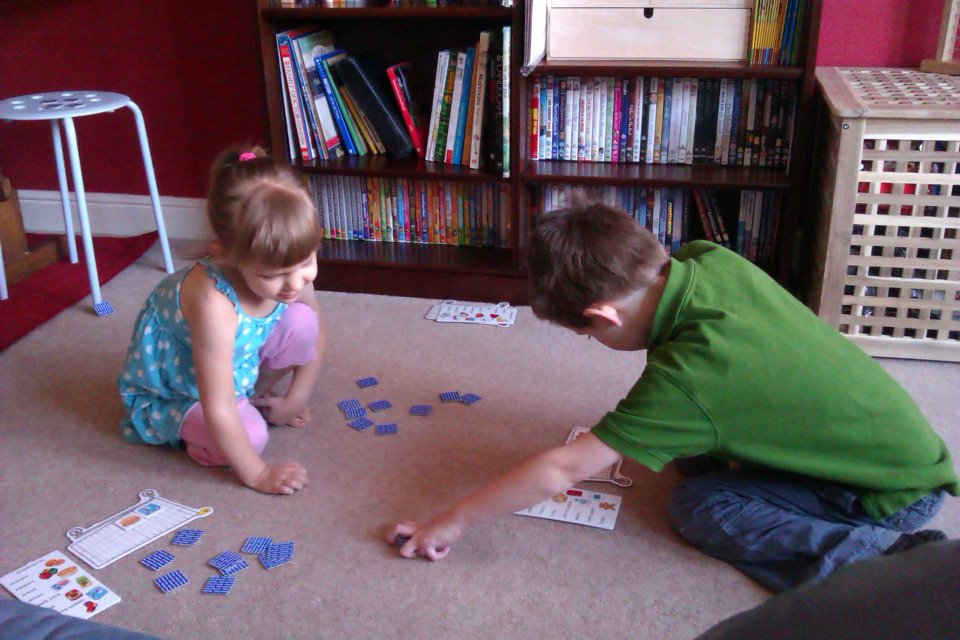
Playing ‘Shopping List’

Fun stories

  • At the moment Prince’s interest has been captured by Usborne’s phonic reader stories. We have the complete collection all in one book. Now, this a pretty thick book, and though Prince is really getting into reading now, I was still somewhat surprised when he picked up the book for the first time, and read all the way through 11 out of the 12 stories yesterday! I was yet more surprised when today, he asked for the book again and read all the way through the whole thing! I asked him what he liked about these stories, and he said, “I like them because there is a pirate one, which is called Big Pig on a Dig. And Ted in a Red Bed is a very nice one. I like all of them, Mommy.”
  • Another fun way to learn about all kinds of topics is through what Charlotte Mason calls ‘living books’. This simply means books which have been written about one topic, by an author who has an obvious passion for their subject. I like the definition given here:

“Living books are usually written by one person who has a passion for the subject and writes in conversational or narrative style. The books pull you into the subject and involve your emotions, so it’s easy to remember the events and facts. Living books make the subject “come alive.” They can be contrasted to dry writing, like what is found in most encyclopedias or textbooks, which basically lists informational facts in summary form. You might be surprised to find that living books are available for most school subjects — even math, geography, and science!”

Reading through Usborne’s phonic reader stories.

I am sure that there are endless ways to have fun and learn at the same time – you just need a little creativity, a love for fun and an eye for opportunities. What fun opportunities do you and your kids enjoy?
Why we homeschool

Our family has made the choice to home education our children, rather than put them in the school system. Below is an outline of the ‘why’ behind our decision. This is certainly not an exhaustive list of our reasons for choosing to homeschool our kids. It is also not intended in any way to make others feel guilty for sending their kids to school. It’s simply an overview of some of the most important and outstanding reasons we believe that – for us – homeschooling is the option we must (and desire to) choose.

Spiritual Training.  Just as a solider training for war should go where he can be BEST trained, so we – training our kids for the spiritual war they will engage in as they grow – want to train them in the BEST possible place. In our opinion, this is not a school setting.  Why?  Because:

  1. We want to create an atmosphere where prayer, Bible study and unconditional love are a central part of their learning process, as we believe this creates a solid foundation for a life of love. (Deut 6:6-8)
  2. We want to be able to frequently and consistently show them how the Biblical principals of love, kindness and responsibility should influence thoughts and behaviour, and train them to make this a personal habit for life.  (Proverbs 22:6)
  3. We want them to be totally immersed in an atmosphere of love, acceptance, affirmation of who they are, and be the ones to provide consistent and loving discipline. At school we perceive that they will be too exposed to anger, bullying, discouragement and lack of discipline which can negatively impact character development.
  4. We want them to regularly observe adults and children who model love, integrity and diligence – characteristics we feel they should be aspiring too. Kids imitate what (and who) they see the most.
  5. We want them to be comparatively free from the long and daily peer pressure to conform to worldy standards. We want to control such exposure so they learn to love those they disagree with, rather than imitate them.

Academic excellence.  With ratio at almost always close to 1:1, we believe that education at home is far more likely to be of good quality than education at school. Even without formal teacher training we believe this is achievable. How?  Because:

  1. We can work hard at developing and maintaining a love for learning in our children. This (which is so easily and quickly lost in school settings) will help them to be life-long learners, and people who are diligent to search out whatever they need to know in the future.
  2. We are able to be very in tune with what subjects and topics each child enjoys, finds easy, or struggles with in some way. We can tailor their education to these strengths and weaknesses, moving ahead quickly when they excel, and taking the time needed when they would otherwise have struggled.
  3. We can focus on true understanding rather than test scores. Learning can be put into context and become meaningful, rather than abstract.  Long term learning is the goal.
  4. With the responsibility on our shoulders of educating our children, we tend to learn alongside them. This means that we are able to weave threads of learning easily through-out life as whole.  Learning becomes a natural part of life, not a 9am-3pm chore.  It also becomes a shared process of enjoyment and mutual encouragement.

Personal development.  There is no need to fear a lack of socialisation in homeschooled children – in fact the opposite may be true. Homeschooled kids are constantly around a variety of ages, and learn how to interact in everyday life, rather than the artificial situation which a class, year or grade makes up at school. With homeschool co-ops, clubs, music, art, swimming, church, camps, etc, there are no shortages of opportunities to socialise. But apart from this, there are other personal developmental benefits to homeschoolng:

  1. Self-discipline.  Opportunities to learn by one’s own initiative come up frequently in home education, and this promotes self-discipline, a huge benefit for life in the adult world.
  2. Problem solving.  While this can certainly be learnt at school, it may not be taught as specifically as we would like. We want to be around to teach loving and peaceful ways to solve both interpersonal and situational problems.
  3. Acceptance of others. Unlike the cliques which develop so easily in school settings, we can encourage children to play with, help and engage with people of all ages and abilities.
  4. Personal conviction.  Children should be free to question and challenge ideas and beliefs in an atmosphere of open-mindedness and honesty. We will not teach them just one view as right, to be taken as fact without question, but rather encourage them to examine and search out the evidence for themselves.  We will explain what we believe and why, and actively help our children to make their own decisions based on accurate interpretation of the available evidence.

Ultimately, we feel that God has given us (not teachers, day-care providers, babysitters or anyone else) the responsibility to bring our children up “in the training and admonition of the Lord” (Eph 6:4), and feel that we will best carry out that responsibility by educating our kids at home.  We believe that education at home can be first-class, and that the personal skills instilled will best prepare them to go into the world as loving, useful members of society.

Natural learning

As a homeschooling Mom, one of my greatest joys is watching my children learn new things. Right now we don’t follow any particular curriculum, have any set ‘school work’ for each day, or follow any term timetables. Instead, we are adopting a relaxed, holistic, natural learning method. Whilst there are merits with a classroom style approach to education, I believe that the best learning happens in every day life, as we pursue our interests and talents, as we master necessary skills, and as we encounter people with a passion for different topics. I think this is especially true for young children, who find it so hard to sit still and listen to lessons. As the kids get older I will re-evaluate our style, but for now natural learning is working for us.

So what does this natural learning method involve, and is it effective? The short answers are ‘a willing heart’ and ‘yes’. For the longer answers, read on 🙂

It’s hard to say what a ‘typical’ day looks like at our house, in terms of education, but here are some things that happen fairly often:

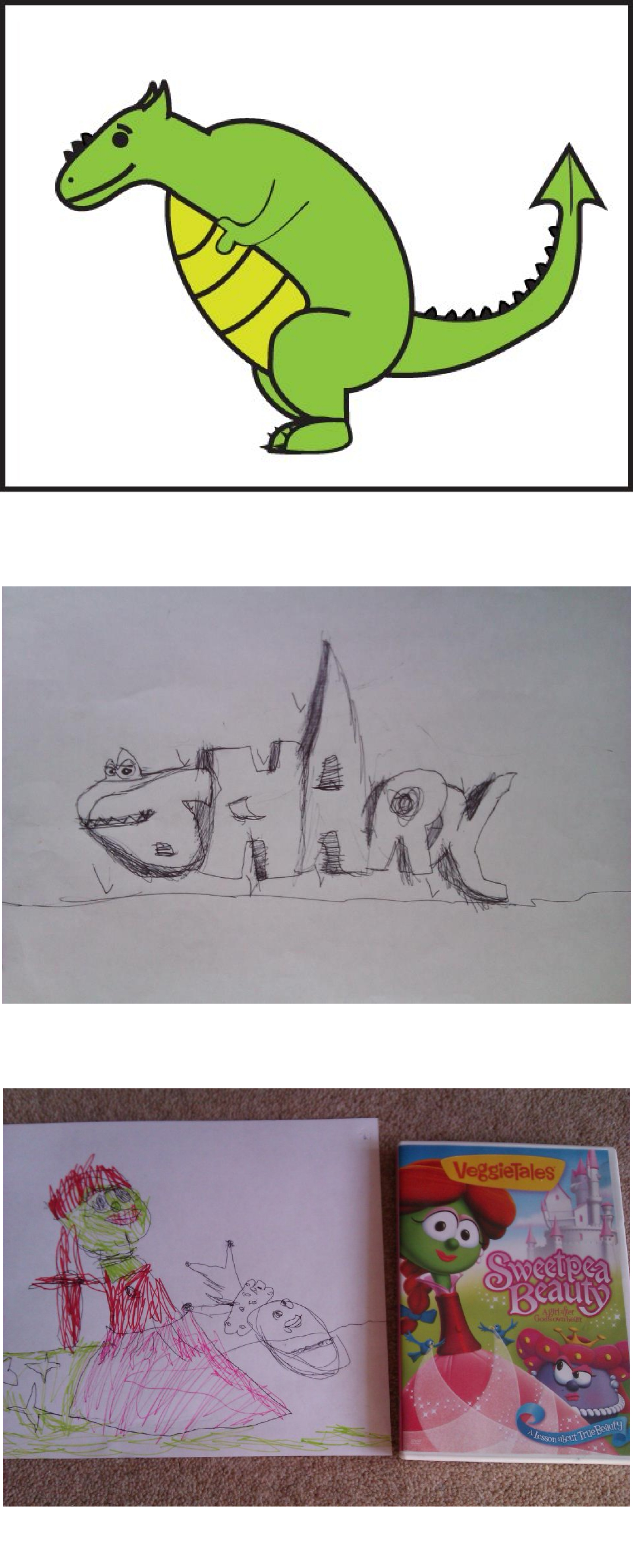
  • Top: a graphic design project Prince and I created
    Middle: ‘Shark’ from ‘WordWorld’, by Prince age 5
    Bottom: Copywork by Princess, age 3

    Reading.  All kinds of books are read in our house. So far today, for example, the kids have read (or listened to me read) ‘The Life of Jesus’, ‘Usborne First Illustrated Maths Dictionary‘, ‘The Story of the Olympics‘, various sections from ‘Animal Kingdom’, ‘The Big Dark’, ‘My Daddy is a Giant’ and ‘Lines and Squares’. Out of all these the only one I initiated was the poem, ‘Lines and Squares’. This reading has provided learning in the following ‘school’ topics: English (reading), religious education, maths, English literature, history and geography.

  • Drawing.  My kids are prolific drawers! They have usually drawn a few pictures each before I am even out of bed.  They take great care and devote a lot of time to their pictures. This, obviously, covers the topic of ‘art’, but we also find that their drawings inspires learning about other topics, such as geography. Today Prince also helped me create the graphics for his birthday invitation in Adobe Illustrator, which provided some ICT learning.
  • Dancing and music.  Princess especially likes to dance. She is inspired by her cousin, and also loves to choreograph her own dances and put on shows. We have a variety of classical music we love to listen to, and our favourites are Vivaldi, Mozart and Andrea Bocelli. With this we cover some P.E., music, and performing arts.
  • Questions and conversations.  Prince is at that inquisitive age, where it’s practically impossible to keep him from learning! He’s always asking questions about things, and having conversations with Daddy or me about topics which interest him. Sometimes we expand upon this by looking up more information in a reference book (our dictionary or atlas), or searching on the internet. A lot of educational topics are covered this way.
  • Writing.  Both kids like to make their own books, written and illustrated. Prince is developing quite a collection. They also write messages on their pictures, write out the ‘verse of the day’, and today Prince wrote out names on his birthday party invitations. We use these opportunities to learn spelling, grammar, handwriting, composition, creative writing, etc.

There are so many other opportunities that come up ever day – it’s impossible to even remember them all, let alone list them! We do field trips, cooking, painting, gardening, counting, telling the time, astronomy, patterns, imaginary play, construction, French, life skills, science, environmental awareness, health and nutrition, and much more.

In summary, natural learning is a fun, holistic approach to eduction. The key to making it work is, in my opinion, an open, willing mind and dedication. When we take time to see and take hold of the learning opportunities in every activity we can inspire our children to learn and seek out knowledge through their everyday life.

Newer entries »