My Homeschool Day in the Life with a 5 and 7 year old

I love hearing how other people construct their homeschool days. I like to find new ways of doing things, ideas I can incorporate and lessons I can learn from. Recently Simple Homeschool ran a ‘day in the life’ series and ended it by inviting readers to share their own days – so I am! I hope you enjoy this peek into our life as much as I enjoy living it!

Friday 14th, 2014 – Valentine’s day!

7:30 am

Wake up! I don’t always get up at 7:30, as I don’t like to set an alarm. I usually wake when the kids climb into bed for morning snuggles, but today they stay in their room playing quietly so I wake on my own. Not sure what time they got up… probably 7ish, as normal. Once I’m up I tell the kids it’s time for ‘Morning High Five’, a fantastic idea I found on this blog recently. I adjusted the download from there to suit our own needs and ended up with this Morning High Five poster – feel free to print and use, but please keep the original copyright info so the right person gets the credit 🙂

How we do morning 'stuff'.

How we do morning ‘stuff’.

We normally complete this list of morning jobs and end with a super excited high-five. Today, though, we have swimming lessons so we skip the chores and get ready to go out quickly.

8:00 am

Princess & I finish getting ready for swimming while Prince, who has finished everything he needs to do, catches a few mins to read some Magic School Bus in his Book Nook.

8:15 am

It’s time to leave for swimming. We are blessed to have private swimming lessons funded by Grandma, so the kids get detailed attention from their teacher and are able to progress quickly and effectively.

10:15 am

We’re back from swimming now.  I get a snack sorted (brownies made with spelt flour and muscovado sugar – that’s healthy, right?!). Prince sets up our next activity (Bible Study) while Princess gets out the abacus and does some counting.

10:30 am

Friday is our Bible Study day (we have a rota of different types of Bible/worship/devotional sessions that we go through each week). We’re in John currently, and read a bit of chapter 2 today while eating our snack. After talking about it a bit we pick a memory verse and have a short prayer time.

11:00 am

We move into ‘Learning Fun’ now. Prince decides to read the Usborne First Illustrated Science Dictionary while Princess writes out our memory verse, taking extra time to get her letters formed right, and everything spelled and punctuated correctly. In between helping Princess and responding to Prince’s frequent calls of “Mommy – LOOK AT THIS!!!” I practice some French on my Duolingo account.

Learning Fun!

Learning Fun!

11:30 am

I call the kids together and tell them we’re going to do some science. Although this is technically a ‘lesson’ we all see it as great fun and more like an investigative game. Today we learn about air as a real substance, and how to demonstrate that it – along with all matter – has weight (technically mass, but we’re not that far yet) and takes up space.

12:15 pm

We finish our science lesson and I switch on Classic FM for some background music. Princess plays around with a left over balloon from the lesson, while Prince goes back to reading his science dictionary. I get online to check emails, catch up with Facebook, and work on my blog – frequently punctuated by exclamations of interest from Prince and calls that I “must” come see some thing or other. Love it!

12:30 pm

I grab the kids a piece of fruit each and we snuggle up on the couch to read a bit of the poetry book we are going through: Where my Wellies Take Me by Michael Morpurgo. I love this book – it has quality illustrations, a good selection of poetry and a delightful nature-centered story line.

12:45 pm

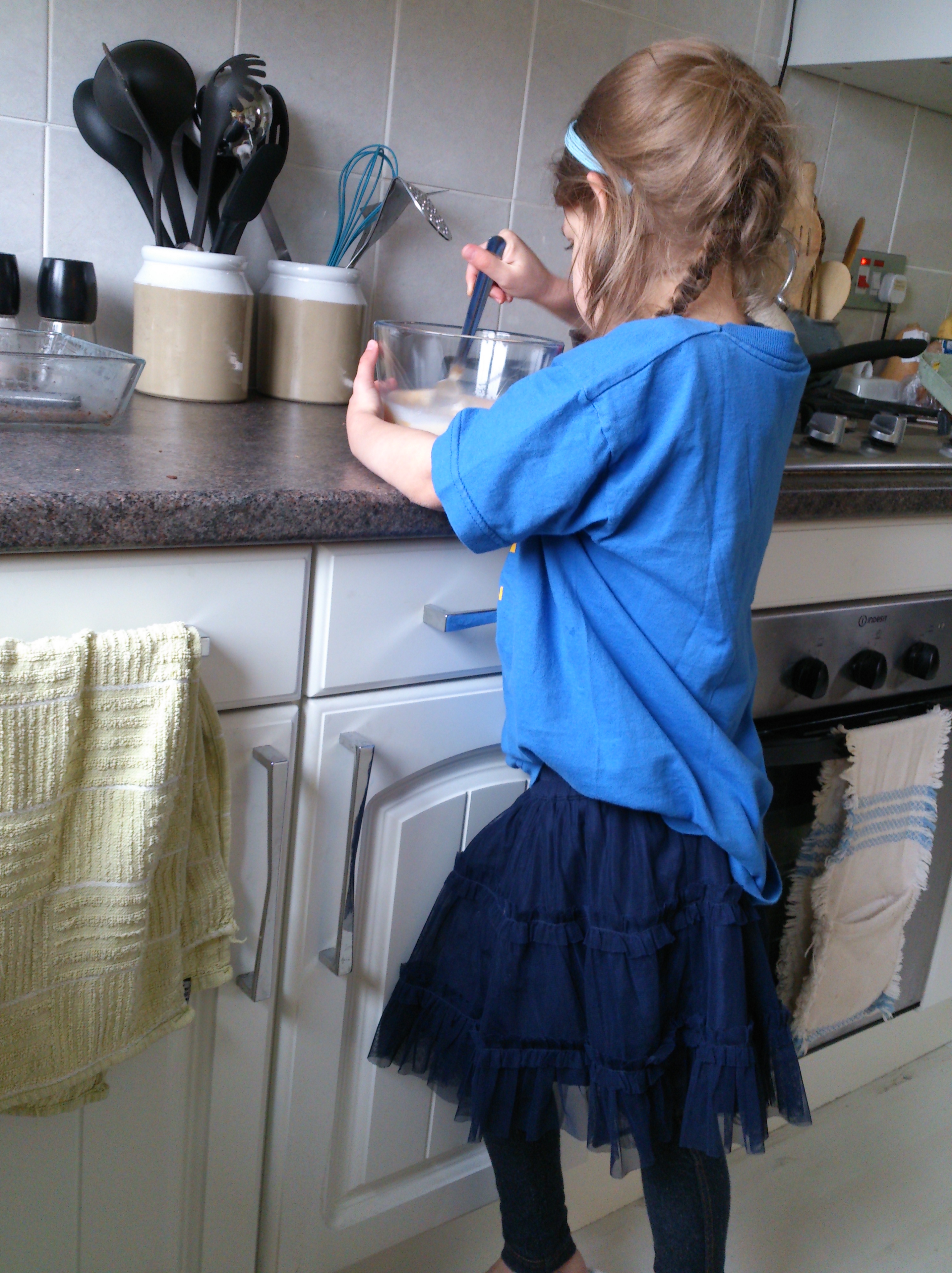
I get ready to make lunch, and Princess decides to help me. Together we mix up a yummy-scrummy scrambled eggs with tomato, onion and fresh basil. Meanwhile, Prince signs into his Duolingo account and does half a lesson of French.
My Princess mixing the eggs.

My Princess mixing the eggs.

1:15 pm

Lunch is ready! The kids settle down to eat while they watch a nature documentary – ‘Life in the Undergrowth’ today. I eat at the computer to catch up with some more online stuff, then unpack my Book People order which arrived earlier in the morning.

1:45 pm

Princess has finished eating, and although the nature documentary is still on, she has had enough of it. Now she moves to the table and makes nature pictures for “sick people” – her aunt, her great-uncle, and her special friend, a girl we support through Gospel for Asia. I sit with her and wrap my husband’s valentines present (‘The King’s Speech’) and make him a card. At 2:00 pm Prince finishes watching ‘Life in the Undergrowth’ and joins us at the table.  He wraps his cousin’s birthday present ready for her party tomorrow.

2:30 pm

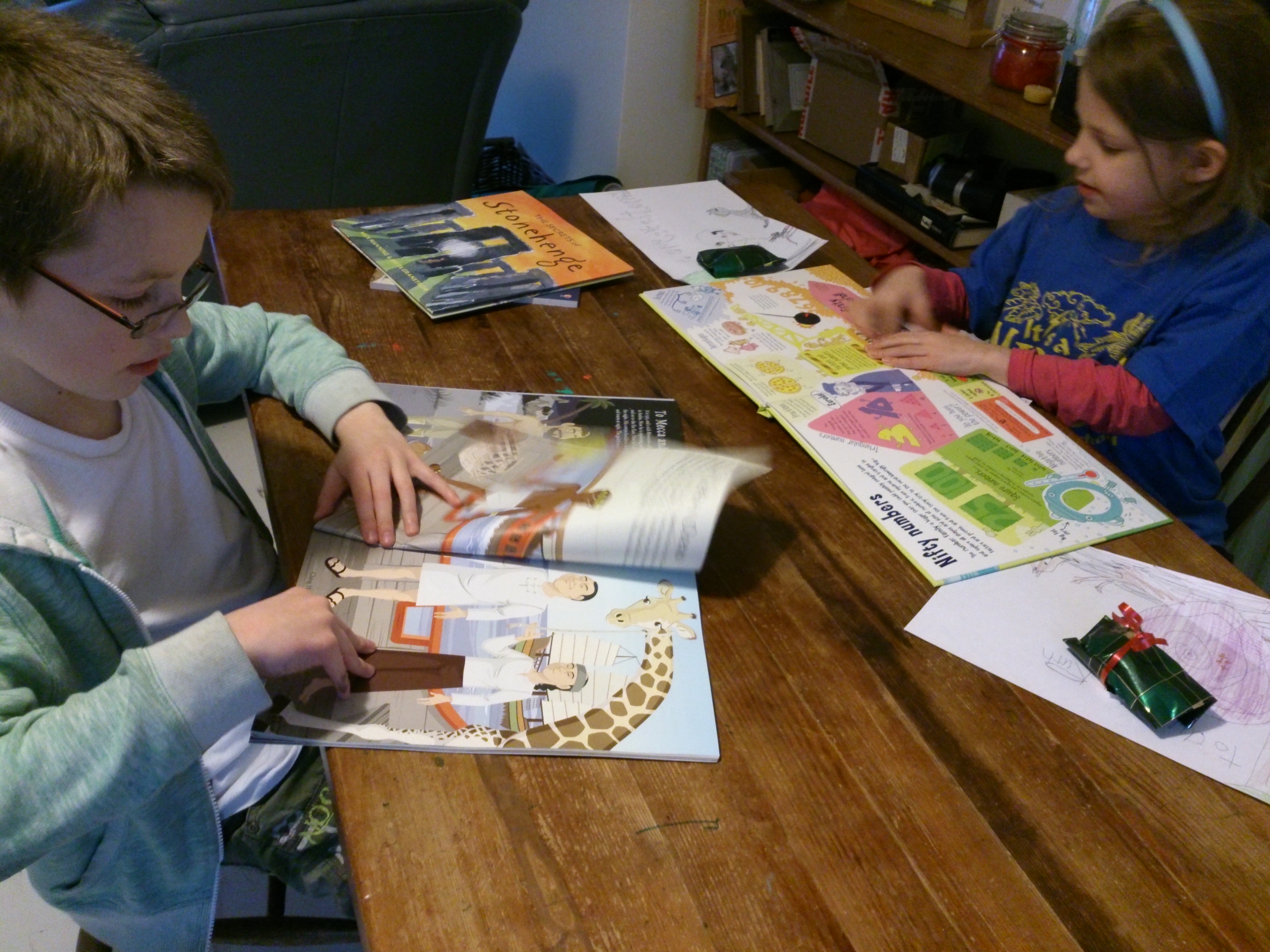
We now have a couple of hours just moving from one thing to another. This time is filled with reading some of the new books, maths on computer, more Duolingo, unpacking the dishwasher, and Skyping with Grandma.
Enjoying the new books.

Enjoying the new books.

4:00 pm

I call the kids to the couch again, and we snuggle together while I read the next chapter of our current read-aloud, ‘Pollyanna’.  I LOVE this book!  If you have a Kindle you can get it for free, which is simply awesome.

4:30 pm

It’s tidy-up time. We always try to tidy up before Daddy gets home. Usually this is when I also make supper, but Friday means Family Night and take-out chips for dinner!

5:15 pm

Daddy’s home! We settle down to watch an episode of ‘Little House on the Prairie’ while we eat our chips. Prince has a slight earache, so I make him up a ‘garlic hearing aid‘ which seems to sort it out.  I love garlic on so many levels.

6:30 pm

We send the kids up to get ready for bed. Daddy helps them, then we all climb onto our bed for Bible reading with Daddy. He’s reading right through the Bible, and tonight we are in Genesis at the battle of four kings against five. At one point Daddy reads something about ‘tar pits’ and stops to check if the kids know what those are. This conversation ensued:

Daddy:  “Do you know what tar pits are?’
Prince:  “No.”
Daddy:  “They are pits which are full of black, sticky, thick, icky, gooey stuff.”
Prince:  “Like tar?”

7:15 pm

After praying with the kids we go down to watch ‘The King’s Speech’. I get foot rubs, which is always one of the best parts of my day.

10:00 pm

Bed! After a super fun day of learning and love it’s time to sleep. What a blessed Momma I am!

Leadership Education

I am currently reading Oliver & Rachel DeMille’s ‘Leadership Education: The Phases of Learning‘. I was directed to it via a blog I enjoy regularly, Simple Homeschool. Jamie Martin does a fantastic job of explaining Leadership Education in practice over there, and I recommend you check out her many posts to find out more about what it’s like to live this philosophy.

Although I am not even half-way through this book yet, I have found it to be inspiring, practical and fitting with my own ideals of education. The focus is on educating a child in the things that matter most, first. Then it follows up with inspiring a love of learning which will lead children to seek out a superb quality education. It talks a lot about tailoring education to each child’s unique talents and gifts, and seeing the goal of education as preparing them for their personal ‘life mission’. This might be in international ministry, an office job, a world-renowned scientist or a homemaker.

Reading 'Leadership Education' on my Kindle, thanks to my amazing Granny who just knew I "needed" one!

Reading ‘Leadership Education’ on my Kindle, thanks to my amazing Granny who just knew I “needed” one!

After reading through the theory part of DeMille’s book, I put together a personalised summary of the principles and beliefs that Leadership Education promotes. I emphasise personalised for two reasons: First, having not yet read the whole book I may have misinterpreted some aspects, as I don’t yet have the whole big picture. Secondly, I have included notes and quotes which reflect what I take from the book, which is not always exactly what the book means (though in most cases it is). I originally wrote this summary for a friend, but found it a helpful overview myself. I share it with you below, and hope you too find it inspiring, encouraging and useful.

I would especially like to hear from others already using Leadership Education, or those who have read the book and have more comments to offer about it 🙂

Please note that all text in quote marks come directly from the book.  I have not attached page numbers as Kindle versions don’t provide that information.  If you would like to know exactly where a specific quote comes from, please do ask and I’ll provide you with a proper reference.

Basic Premise

There are two main methods of education:

  • Conveyor belt
    • offers all children a set knowledge base without consideration of their specific gifts
    • expects all children to learn through the same (or at least, very similar) methods regardless of age
    • focusses on academic achievement as the main goal
  • Leadership
    • focusses on each child’s unique gifting and starts with this as a basis for learning
    • believes that children learn differently at different stages of life, and adjusts methods accordingly
    • lays a foundation of morality, spirituality and character development, believing this is of central importance to all other learning

 Theory

There are six stages of learning that students should progress through chronologically

‘Nearly all development occurs in stages or phases. This is also true of education. We believe it is important to take advantage of each phase of development to its fullest.’ Ages for the stage are guidelines only, as each child is unique in development.

Foundational Phases

‘over-programming’ during these phases can cause conflict in the child. This is a crucial time to figure out ‘what is success? What is maturity? … What is my relationship with God? What is my relationship with others? What is my duty? And so forth.’ ‘When we give inappropriate attention to academic achievement during these phases, it can teach our children that they dislike academics because everything is “hard” and “boring,” and/or offer our children an alternative source of self-worth that is inferior to a genuine and positive self-concept resulting from living according to true values such as faith, good works and accountability.’

  • Core:  birth to eight or nine
    • ‘During core phase we lay the foundation for all learning and service in the child’s life.’ The ‘curriculum’ is made up of values, relationships, identity and responsibilities.
  • Love of Learning:  eight to twelve
    • Pressure to learn formally in this stage can cause negative attitudes to learning. ‘These are the years when children dabble with learning, getting to know “what’s out there.”’

Educational Phases

‘During this period the bulk of a person’s “book learning” takes place.’ Through this phase the student will being to use about 70% of their time in intensive learning. Important topics are ‘our place in history and the cycles of society.’

  • Scholar:  twelve to seventeen for girls, thirteen to eighteen for boys
    • ‘At first, the new scholar may only study a few hours at a time, but … by the end of Scholar Phase, most student are studying well over forty hours a week.’ Students are still free to study their own choices of topics, though teachers should encourage and inspire them to ‘see the value, relevance, and excitement of studying other important subjects.’ Teachers should be careful not to ‘knee-jerk’ and require conformity to conveyor belt education at this stage, however some formal education at a college or similar is often useful for some topics. Mentors are key during this phase, and ideally fathers should be one of these. During these teenage years, ‘A leadership view replaces the conveyor-belt search for identity with a quest for vision and mission.’
      • NOTE:  there is a “semi-phase” before scholar, termed ‘transition to scholar’. I have not read further on this yet.
  • Depth: eighteen to twenty-four
    • ‘During depth phase, mentors asses student strengths and weaknesses, help students fill in gaps in their knowledge, go into real depth in their areas of strength and passion, and otherwise lead young people in preparation for their life mission and focus.’ As youth typically leave home for college/uni/work during this stage, it is vital that you prepare them to find mentors of their own who will encourage them wisely. This should be a time of mastering self-control and developing education to career-level.

Applicational Phases

‘Leadership Education will naturally be followed by a life of service and leadership.’ This is the time to carry out one’s personal mission work, and to have an impact on future generations. ‘The greatest component of the Applications Phases is not education per se; it is application of one’s education and whole soul to improving the world.  These phases do not have age guidelines, but relate more to the two periods of life as an adult, and then as an elder.

  • Mission
    • This phase is about ‘building the two towers of family and organization’.
  • Impact
    • This phase is about ‘changing the world to be whatever it should be for your grandchildren and their children’

 Learning Keys

There are eight keys of great teaching which can be applied throughout the phase, which enhance learning.

  • Classics, not textbooks
    • ‘Great works inspire greatness.  Mediocre or poor works inspire mediocre or poor learning.’
  • Mentors, not professors
    • Different emphasis ‘professors’ teach a set curriculum, ‘mentors’ find out student goals, talents etc. and ‘develop and carry out a plan designed to effectively develop his genius and prepare him for his unique mission.’
  • Inspire, not require
    • Lack of inspiration should cause the teacher to question ‘what do I need to do to spark their passion to do the hard work?’
  • Structure time, not content
    • ‘Great teachers and schools allow young students to follow their passions and interests during their study time and inspire them as needed to take on areas they may not initially recognize as interesting and desirable.’  This requires a degree of trust from the teacher, both in the student and the method.  ‘Students must have the freedom to fail in order to truly take responsibility for their own progress.  They must know that their education, their life, their mission, will hinge upon their own choices.’
  • Quality, not conformity
    • Resist the pull to conform to educational norms if they do not contribute to the lessons which need to be learnt at each child’s specific stage.  Also, ‘Great teachers inspire and demand quality, ever urging their students to higher levels of excellence.  They shun mere conformity and expect their students to think and perform to their ever-increasing potential.’
  • Simplicity, not complexity
    • Don’t feed students overcomplicated curriculums.  This fosters a dependence on experts and an attitude that he/she is not able to learn and understand for themselves.  Rather, ‘students study the greatest minds and character in history in every field, write about and respond to what is learned in numerous settings, and apply it in various ways under the tutelage of a mentor’
  • You, not them
    • ‘Focus on your education, and invite them along for the ride.  Read the classics in all fields, engage mentors who inspire and demand quality, structure your days, weeks and months to include study time for yourself, and become a person who inspires great education.’
  • Secure, not stressed
    • Try to ‘know what you are doing is right and that you are doing it effectively’.  Use your own system of knowing what is right to evaluate Leadership Education and see if you believe it is right for your family.  If it is right, then learn to do it effectively by taking advice from others who have done it before.  Being secure instead of stressed will result in peace, focus and joy in your educational journey.

A delight-directed journey to the ocean

I have mentioned before that we take a natural learning approach to homeschooling our kids. Delight-directed learning is another term I like to use to describe what we do, and I’d like to share an example of the way this works in our family.

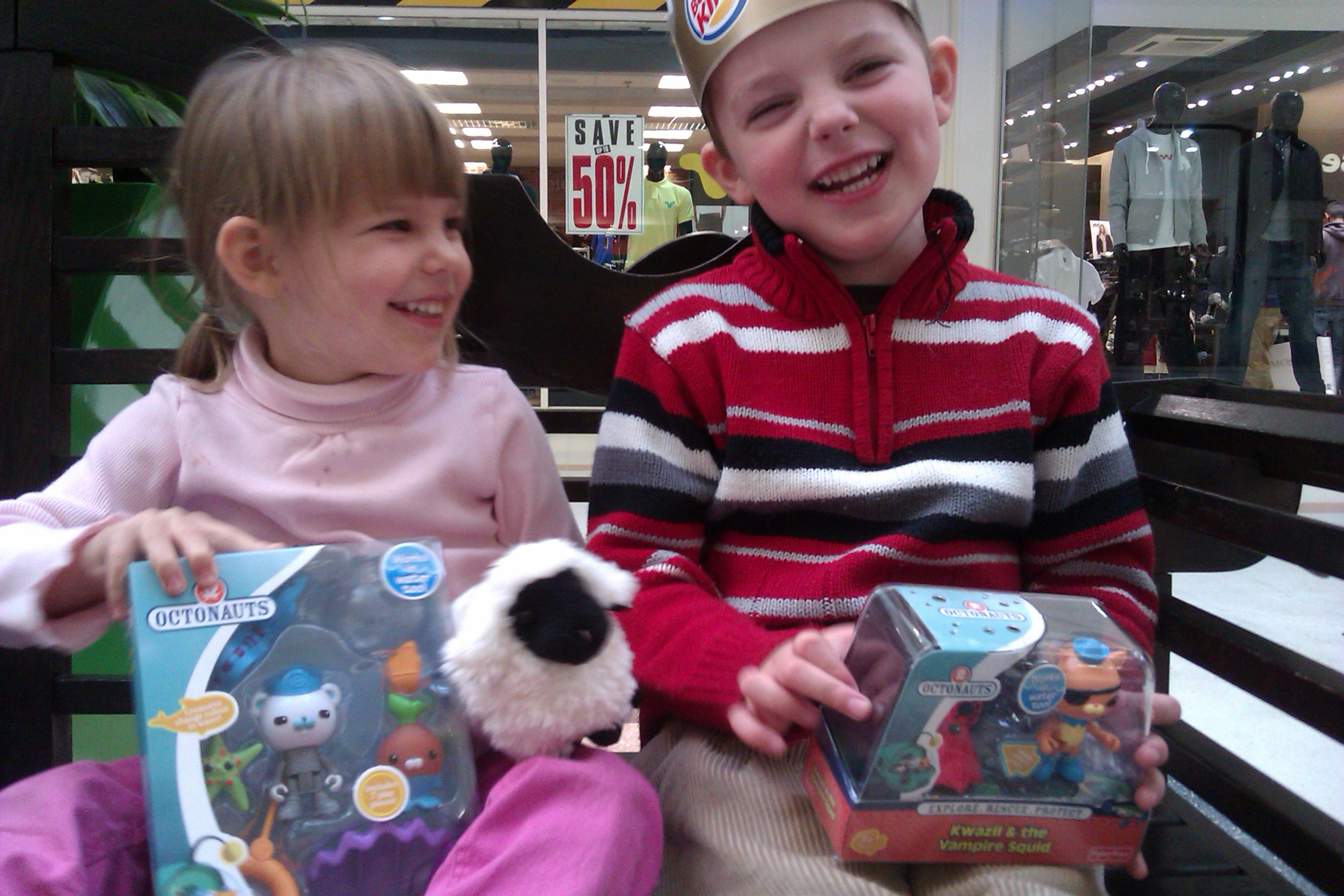
Octonaut happy kids!

Late last year the ‘Octonauts‘ became a popular cartoon series on TV here in England. Although we don’t generally watch TV, we happened to stumble across this program and Prince instantly became hooked. For those who haven’t heard of it, the Octonauts is about a team of animals who go on missions under the ocean to help sea creatures who are in trouble. Having checked it out, my husband and I agreed the cartoon was fun and harmless, and so let him watch it whenever the opportunities arose. Quickly the Octonaut fever grew, and by the end of Christmas he and his sister were the lucky owners of almost all Octonaut gear available! It was then that I started to notice his increasing knowledge of sea creatures and the ocean.

By May this year Prince’s love for Octonauts had started to fade slightly, but replacing it was a deeper interest the real ocean and the creatures who live in it. For his birthday we decided to celebrate this with a trip the to the London Sealife Aquarium, which he LOVED!  From then on his passion has grown and grown. As he showed greater interest, we helped him to learn more by providing him with books, documentaries, posters, field trips and other sources of information (some of these were free, others we spent money on).

Allowing Prince’s learning to be directed by his delight has had amazing results. In less than a year he has gone from knowing practically nothing about the ocean, to being an expert on sharks (most especially the great white, which he thinks is just beautiful) and knowing more about the ocean than anyone else I know (adults included).

It may be obvious that through this passion Prince has learned a lot about science, but what may not be obvious is that it has also contributed to other areas of his education too. For example:

– His reading has improved as he borrows, buys and reads every book he can on the topic.
– Similarly, his vocabulary has increased to include many specialist words he would not otherwise have come across.
– He is grasping mathematical concepts such as percentages, size and weight measurements.
– He has written and illustrated several books on the ocean and its creatures.
– He researches and draws anatomically correct pictures of varieties of different species.

Delight-directed learning really is a delight, and I am so thankful to God that we are able to pursue this style of home education!

Natural learning

As a homeschooling Mom, one of my greatest joys is watching my children learn new things. Right now we don’t follow any particular curriculum, have any set ‘school work’ for each day, or follow any term timetables. Instead, we are adopting a relaxed, holistic, natural learning method. Whilst there are merits with a classroom style approach to education, I believe that the best learning happens in every day life, as we pursue our interests and talents, as we master necessary skills, and as we encounter people with a passion for different topics. I think this is especially true for young children, who find it so hard to sit still and listen to lessons. As the kids get older I will re-evaluate our style, but for now natural learning is working for us.

So what does this natural learning method involve, and is it effective? The short answers are ‘a willing heart’ and ‘yes’. For the longer answers, read on 🙂

It’s hard to say what a ‘typical’ day looks like at our house, in terms of education, but here are some things that happen fairly often:

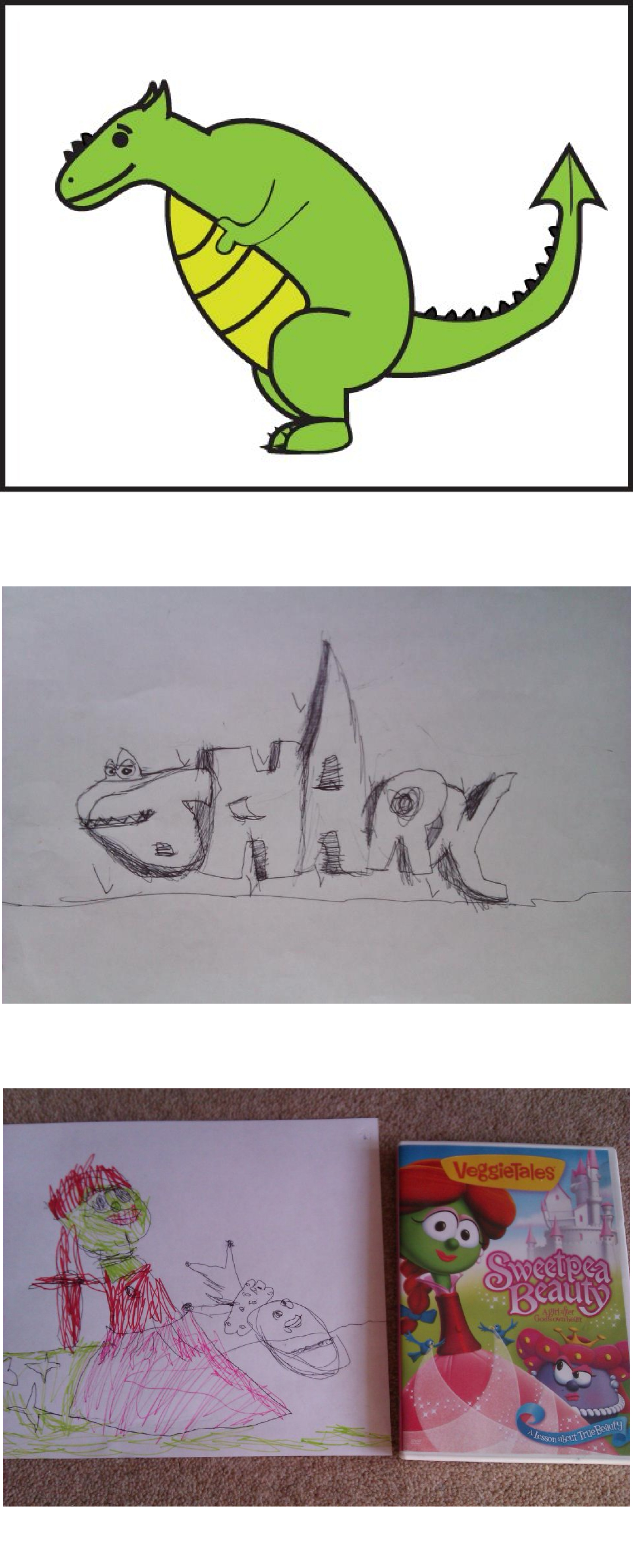
  • Top: a graphic design project Prince and I created
    Middle: ‘Shark’ from ‘WordWorld’, by Prince age 5
    Bottom: Copywork by Princess, age 3

    Reading.  All kinds of books are read in our house. So far today, for example, the kids have read (or listened to me read) ‘The Life of Jesus’, ‘Usborne First Illustrated Maths Dictionary‘, ‘The Story of the Olympics‘, various sections from ‘Animal Kingdom’, ‘The Big Dark’, ‘My Daddy is a Giant’ and ‘Lines and Squares’. Out of all these the only one I initiated was the poem, ‘Lines and Squares’. This reading has provided learning in the following ‘school’ topics: English (reading), religious education, maths, English literature, history and geography.

  • Drawing.  My kids are prolific drawers! They have usually drawn a few pictures each before I am even out of bed.  They take great care and devote a lot of time to their pictures. This, obviously, covers the topic of ‘art’, but we also find that their drawings inspires learning about other topics, such as geography. Today Prince also helped me create the graphics for his birthday invitation in Adobe Illustrator, which provided some ICT learning.
  • Dancing and music.  Princess especially likes to dance. She is inspired by her cousin, and also loves to choreograph her own dances and put on shows. We have a variety of classical music we love to listen to, and our favourites are Vivaldi, Mozart and Andrea Bocelli. With this we cover some P.E., music, and performing arts.
  • Questions and conversations.  Prince is at that inquisitive age, where it’s practically impossible to keep him from learning! He’s always asking questions about things, and having conversations with Daddy or me about topics which interest him. Sometimes we expand upon this by looking up more information in a reference book (our dictionary or atlas), or searching on the internet. A lot of educational topics are covered this way.
  • Writing.  Both kids like to make their own books, written and illustrated. Prince is developing quite a collection. They also write messages on their pictures, write out the ‘verse of the day’, and today Prince wrote out names on his birthday party invitations. We use these opportunities to learn spelling, grammar, handwriting, composition, creative writing, etc.

There are so many other opportunities that come up ever day – it’s impossible to even remember them all, let alone list them! We do field trips, cooking, painting, gardening, counting, telling the time, astronomy, patterns, imaginary play, construction, French, life skills, science, environmental awareness, health and nutrition, and much more.

In summary, natural learning is a fun, holistic approach to eduction. The key to making it work is, in my opinion, an open, willing mind and dedication. When we take time to see and take hold of the learning opportunities in every activity we can inspire our children to learn and seek out knowledge through their everyday life.

Newer entries »