Listen – kids are people too

One of the blessings of having a good memory is remembering what it was like to be a kid. I had a great childhood, really – full of love, fun, and Little House on the Prairie with my bestie.

But I also remember some of the frustrations. Most clearly, I remember being frustrated when adults assumed they knew what I had done/was going to say/felt.  I can’t remember any specific instances, but I do remember the feeling of not being heard.  And as I grew up I was determined that my own children should not have this same frustration.

As a mom now, I find this is easier said than done. It is so easy to assume I know what’s going on in my children’s minds; to assume that I know the whole story behind a disagreement between siblings; to assume I know how it feels and the reason why my child is crying when I say ‘no’ to something. But the truth is, I don’t know everything. And so, I make an effort to listen to my children’s explanations and points of view, and I try hard to avoid making assumptions. I don’t do this perfectly, sadly. But I have a story which illustrates so clearly why I am glad I try, and how blessings abound when I succeed.

A couple of years ago Prince and Princess where playing in the lounge. Prince had left some of his toys unused on the table. After a while Princess, sitting on the floor in the middle of a game, needed an extra character, and seeing the unused toys on the table and asked,

“Prince – can I have your penguin?”

Prince look at her uneasily. I pricked up my ears to listen in, wondering if he would take this opportunity to be generous (something he had been struggling with a lot recently).

“Well…” he said, “That’s a very special toy to me. Couldn’t you have one of these instead?” Prince offered her two or three other toys.

I was disappointed. I felt angry, even. He just couldn’t seem to shake this selfishness – he wasn’t even using the toy! But instead of demanding he give her the toy and lecturing him on being kind (which is what I felt like doing), I stopped and thought about how to act. I then asked him a question.

“Prince – why don’t you want Princess to have the penguin? You’re not using it.” I said this simply, not accusationally. I genuinely wanted to know why he wasn’t giving her the penguin. What was stopping him?

Prince looked up at me, slightly teary-eyed. “Well – it’s very special to me. It’s one of my first big-eyed-toys! But…” He hesitated, as if needing my help, “does she want to have it forever?”

Prince and his penguin in their early days.

Prince and his ‘big-eyed’ penguin in their early days.

Suddenly it dawned on me. My prince – my precious, darling, oh-so-literal Prince – heard his sister ask to ‘have’ the toy, and assumed she meant ‘have to keep forever as her own’.

“No, darling,” I explained, “She just wants to use it for this game!”

Prince looked relieved. “Oh!  Okay!” He passed her the penguin immediately.

I was convicted of my anger. Here I was assuming Prince was being selfish, when in actual fact he was being extremely generous. Remember – he chose some of his other own toys to give his sister ‘forever’, as he understood it. I’m so grateful that I chose to ask him to explain his own perspective on the situation. It blessed me, as I saw his generous heart; and it blessed him, as he was not unfairly accused of selfishness.

I think back on this situation often, and use it to remember that kids are people too. They deserve the respect of being listened to and heard. Their understanding, opinions and explanations are not always what we think they will be.

Let’s stop assuming we know it all, and take time to really listen to our children.

The window to your heart

“And consider ships: Though very large and driven by fierce winds, they are guided by a very small rudder wherever the will of the pilot directs. So too, though the tongue is a small part of the body, it boasts great things. Consider how large a forest a small fire ignites. And the tongue is a fire.”
James 3:4-6

Words. Many lessons have been written on the power of words. The tongue has been called the strongest muscle in the body, and the Bible speaks of its power in the book of James, likening it to a rudder which can steer the whole course of a ship, or a fire which can cause devastation.

wordsAs a homeschooling Mama my kids hear a lot of my words! We talk about everything from history, to meals, to Lego, to toilet habits… I’ll stop there 😉  Being with my kids more than your average UK parent has made me think carefully about how I speak to them. I have noticed that it is easy to slip into the ‘I’m busy but I’ll nod and say “uh-huh” even though I have no idea what you said’ mode of conversation.  There are plenty of comic strips and Facebook images which joke about this. It seems to be a universal Mom thing. But it’s not funny. Now I know that you and I are busy people. But what do our conversations tell our children about our hearts… and their value?

When we speak to our children, we are showing them a little of our heart. Our words are a window. Not just our words, in fact, but our tone of voice, eye-contact, expression, and all those other non-verbal communication attributes. If I am staring at my computer and say the glazed “uh-huh” when Prince comes to tell me about how the latest GUP is the coolest thing, what are my words and actions telling him?Here’s a list off the top of my head:

  • I am selfish
  • I value other interests above him
  • I have no self-control
  • His effort is unimportant
  • He is not interesting to me
  • He is not high on my priority list
  • Computers are a god
  • It’s okay to ignore people

These are pretty shocking messages. Even more scary is the fact that even if I was doing something REALLY important, he is still getting these messages. As I see it, if I don’t want him to get these messages I have two options: 1) Put him first whenever possible: Stop, look at him, smile, appreciate, ask more questions (rather than hoping he hurries up and finishes talking), hug him, praise him. OR 2) if what I am doing is pressing and important: Stop, look at him, explain “I’d love to hear what you’re saying, but I’m just in the middle of something urgent. I’ll get back to you as soon as I can, and you can tell me all about it, OK?” Now he knows that he is valued highly, but sometimes other issues need to take priority for a time. (Side note: we should balance this advice with make sure our children learn the importance of not interrupting, that they are not the only thing in the world which matters, etc. But in my experience this is a far less common problem, and what most of us really need to work on is giving the message of love and value.)

The busy mom syndrome is just one example of the way we talk to our children, but here are some other messages that our words & non-verbal signals may be telling our children:

  • I don’t like you
  • I’m impatient
  • I value obedience more than a right heart
  • I am inconsistent
  • You are stupid
  • You are insignificant
  • You should be perfect
  • My desires are more important that yours
  • You don’t deserve love
  • Anger can be expressed without love
  • What you do is not important
  • It’s okay to be rude
  • Self should be valued above others
I want to be my kids' best friend!

I want to be my kids’ best friend!

Again, a shocking list. And again, it’s even more scary when you stop to think that it’s not just the ‘bad’ parents out there giving these kind of messages. It’s us. We need to stop and take a good look at what we say and how we say it when we talk to anyone – but especially our children. We must not assume “they know that I love them”, but rather SHOW this in the way we talk. We must let our kids know that we respect, like, love, and appreciate them. How many kids would choose to be friends with someone who preferred the company of Facebook over them, who lost their temper with them on a daily basis, who expected them to be perfect and never thanked them for a job well done? I sure want to be my children’s best friend. And one step to this I believe is learning to speak to them in love all day long, as a friend, mentor and mother.

Our words are a window into our hearts that our children look through each day. Sometimes this window may not reflect accurately what is inside, but it is still what our children see. And sometimes this window is more accurate than we like to admit.

Guest Post: Avoiding Frustration

Heading Things Off At The Pass
Or…
Ways to help avoid frustration in our children

  1. Pray for your children to have peace, contentment, flexibility, generosity & calm.  That’s a big ask but God is a big God… and it is important for us to do the asking on our children’s behalf.
  2. Emphasise foundational concepts regularly.
  3. Help your children learn perspective by pointing out regularly what is (and isn’t) of first (i.e. eternal) importance.
  4. Set clear, realistic expectations AND make sure they have been heard & understood.  My personal favourite – calling gaily from the kitchen whilst making supper (with the extractor fan on) into the lounge (where someone is playing the piano) that supper is nearly ready and someone must please set the table – is NOT what we are looking for!

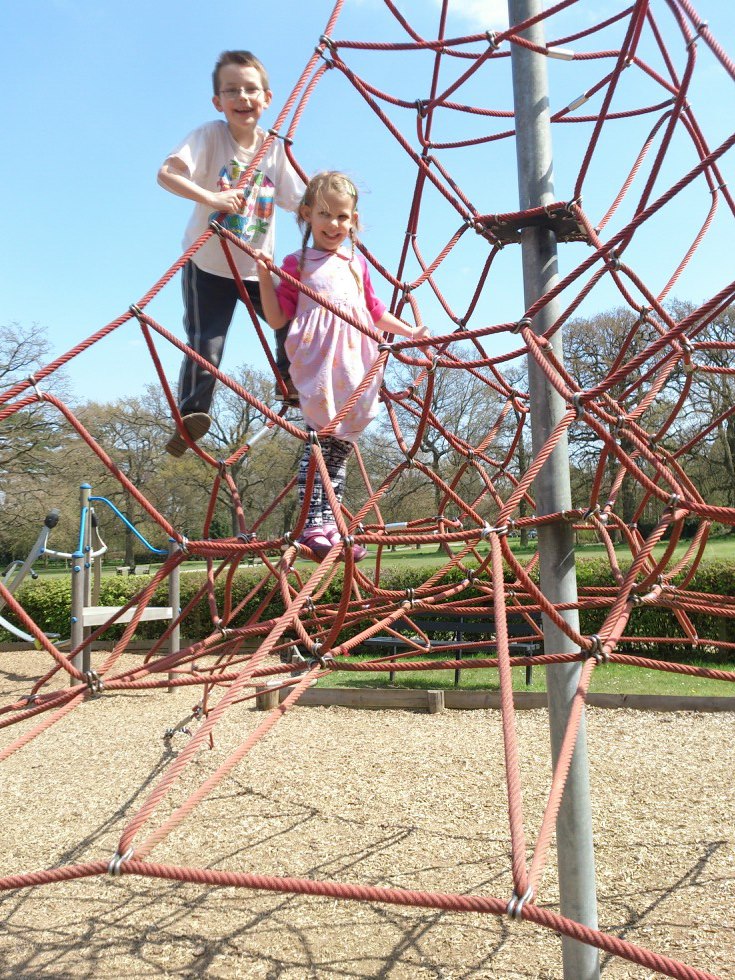
    Conquer the entangling web of frustration!

    Conquer the entangling web of frustration!

  5. Give a warning before you want your children to change what they are doing.  E.g. when they are about to need to tidy up/go out/come for a meal/come inside/stop playing. My children are more often happier with having to stop playing if they can finish a ‘last chapter’ of their game; it lets them get to a suitable stopping point, which is more satisfying than stopping in the middle of an exciting bit.
  6. Early Intervention Plan.  Distract your child from potential/early frustration & come up with alternative courses of action.
    – E.g. If a child is looking lost for something to do/someone to play with, offer them a menu of options to choose from including, if at all possible, some things with you.
    – E.g. If a sibling has done something a child did not want/like, suggest ways the child can be gracious to their sibling – and make that sound like an appealing thing to do so they can be just like Jesus – then offer the aforementioned menu of options for things to do (possibly including doing something nice for the sibling)
  7. Ask YOUR CHILDREN to tell YOU what the right thing to do/say is.  This is a ‘double scoop ice-cream’ type approach:
    Scoop one: you can avoid them getting frustrated with being corrected/told what to do.  This is especially helpful if a) you are a long-winded communicator, like me and/or b) they are a child that needs frequent guidance…some children do.
    Scoop two: you are training them in the discipline of making right choices themselves. Obviously, if they are floundering, help them out – otherwise you start off a new cause for frustration, which is not quite the idea!!
  8. Ask questions, rather than jumping to conclusions.  If you think the situation they are in might be likely to trigger frustration in your child or if you spot their warning signs, asking discreet questions might either dispel your concerns or activate your early intervention plan, rather than you having to help them recover from a meltdown later.
  9. Patiently explain misunderstandings.  Often, when you are in the habit of asking questions, you will discover that there is a lack of understanding in your child. Explain things patiently and calmly, without laughing at the child or putting them down (which is more easily done than you would think – especially if they express themselves in a super-cute way – and can lead to insecurity in some children).

Isn’t it wonderful how when you write these things down they sound so easy and straightforward!  Since drafting this I have been busy trying to remember to put these ideas into practice myself…today was a better day because of it…

What are your ideas on how to head things off at the pass to help your children avoid frustration?

Guest Post: Laying Strong Foundations

“Therefore everyone who hears these words of mine and puts them into practice is like a wise man who built his house on the rock. The rain came down, the streams rose, and the winds blew and beat against that house; yet it did not fall, because it had its foundation on the rock.”
Matthew 7:24-25

Hi! In this family I am known variously as Sinead, Sineadanne, Tobe (pronounced ‘Toby’) and Aunty Tobe – I think that covers it! We have been so blessed by God to have one foster son (adult) and four precious princesses (ranging in age from 7 to 12). We love God, family, music, nature, being creative, food & laughing together!

I was thinking the other day about some basic concepts it is helpful for children to know. It was a useful process for me: taking a step back to survey our parenting focus from a ‘big picture’ viewing point. Below is what I came up with, vaguely grouped but in no particular order of importance.

I thought I would share these ideas in the hope that God may be able to use something to help someone somehow 🙂

RELATING TO GOD

Laying strong foundations is important in parenting.

Laying strong foundations is important in parenting.

– God loves them and desires that they love Him
– Our value comes from the unchangeable fact that God made us and loves us; we & God belong together
– Jesus is a friend like no other they will ever know – even us, their parents – and He demonstrated this on the cross
– When we do wrong things, we deserve to be punished by God. God keeps a record of every wrong thing every person does – but Jesus’ sacrifice means that a Christian does not have to take their punishment as Jesus has already taken it for the
– Following Jesus includes:

  • Putting God first
  • Putting other people before ourselves
  • Showing grace (a simple definition = undeserved favour)
  • Being humble
  • They can talk to God about anything

– Sometimes things are hard/bad things happen – this is actually good in the end as God uses these situations to train and strengthen us

RELATING TO US (PARENTS)

– They can talk to us about anything
– We love them and like them  (Note: these are connected but different things and they need to know BOTH)
– God has given them us, their parents, to look after them and teach them about His love & His ways – THAT is why it is wise & beneficial for them to listen to us
– Our love is unconditional and we will support & encourage them through the ups and downs of their lives
– Unlike God and just like them, we make mistakes (this gives us an opportunity to role model humility, repentance & the joy of God’s grace)

PURPOSE

– Our purpose on earth includes:

  • to love God with all our heart, mind, strength and soul
  • to love others as we love ourselves
  • to fear God
  • to serve God
  • to praise God
  • to honour God

– Our lives (time, words, actions) are created by and for God, not ourselves

Take joy in everything!

Take joy in everything!

JOY

– God will take care of problems and help us cope in hard times, which means there is nothing we can’t get through in life with Him = JOY!!
– Christians go to heaven = JOY!!
– All good gifts come from God and He gives us many every day = JOY!!
– God wants us to look out for these good gifts all the time and be thankful to Him and others for them = JOY!!
– CHOOSE joy – in the end it is always better to look on the bright side

RELATING TO OTHERS

– God will meter out justice (so they don’t have to!)
– Do good to others as much as you can, especially if they are unloving to you
– Imagining what others might be thinking/feeling is useful in knowing how to bless them
– Show grace & forgiveness as you have been shown grace & forgiveness
– Wisdom is seeing things as God sees them & it is something good to desire
– Think BEFORE you speak or act
– It is great to be an encourager/helper

  • Everybody needs one
  • It is good for everyone involved e.g. helper & ‘helpee’.

– People make mistakes – including us and them – it doesn’t make the people less lovable: God forgives them (and us) so we should forgive them (and ourselves) too

Wow – that ended up being a lot longer than I thought it would be! This may seem overwhelming to some of you but let me encourage you; when I start to feel overwhelmed by the magnitude of the responsibility of parenting, I have learnt to remind myself that there are THREE parents: God is working tirelessly to lay strong foundations in our children’s lives – we are just His helpers! Furthermore, we have surprisingly many opportunities in the day to gently teach & reinforce these foundational concepts.

I am sure there are others, too – probably some obvious & important ones – this was just a mind dump with a little revision. Can you add any ideas on foundational concepts children should know? I’d love to hear them 🙂

Brick image courtesy of Kai4107  www.freedigitalphotos.net.

Dear God

As each day of my motherhood journey passes, I am more and more convicted of the need for prayer, in two key ways.

1)  Fervent, deep prayer.  Daily – or at least, regularly – we need to set aside time to go into our room, close the door, and pray to our Father who is unseen. There is no way that any of us are capable enough to raise, teach and fulfill children on our own. We may have gifts, talents, commitment and love, but we are still not enough. I don’t say this to tear us down; I don’t want to submit to false humility or self-deprecation. I just want us to be honest – and the honest truth is no matter how good we are, we are not perfect. We will fail as a parent – and often! The truth is, we need to appeal to a power greater than ourselves to raise our children up in faith. We need to beg God to fill them up with His Spirit, to strengthen their souls, to draw them to Himself, to lead them in His paths, to teach them His truths and to instill in them a life-long love and passion for Him, and an unconditional love for all others.

Not only is this deep prayer an intercession to God on behalf of our children, but it is also rejuvenating and nourishing for our own souls. Spending time with God is like drinking a fantastically healthy fruit and veg smoothie – only better! It builds us up and strengthens us to resist Satan’s attempts to bring us down. Spending time in deep prayer is the best motivation I have found for helping me put into practice the ideals and ideas I have for my children.

The prayer jar, and a faithfully answered prayer 🙂

2)  Sprinkling prayers throughout the day.  It is important to include prayer throughout the day for both our own and our children’s sake. In our house, we try to pray in lots of different ways: together at our Bible snuggle time, stop what we are doing to pray if we hear of a specific need, pray at meal time, and pray at bedtime. Paul, in the book of 1 Thessalonians, says we should pray ‘continually’. I think what he means is that we should have a prayerful mindset. Prayer should be a first reaction to both good and bad situations. Thanking God and asking for His help should be second nature as we go about our daily activities.

There are also many creative ways of adding prayer into your daily life. I particularly like this idea as a way to help our children remember to pray for others. Another idea that we use is the ‘prayer jar’. Anyone can write a prayer or ‘letter’ to God, and put it into the jar. It is fun to look at them again later and see how faithfully God has answered the prayers we have prayed.

What ideas to you have to keep prayer a central part of your and your children’s lives?

Teaching your child to read

I can clearly remember, when Prince was about 2 years old, watching a 5 year old daughter of a friend reading a book, and feeling suddenly very daunted at the idea of teaching my children to read. It seemed such a huge thing, and so difficult. Even though Prince could already tell you the phonic sounds of all the letters of the alphabet, and their names, reading still seemed such a distant and impossible achievement. Yet now, at 6 years old, Prince can easily read just about any book he cares to pick up.

For those of you who are considering home education and might be feeling the same daunting fear that I once felt, I want to encourage you: the path from then to now was easy – and I am no qualified teacher! Here are some things we have done to get to where we are today.

  1. From early on we introduced letters and their sounds in play. One of my favourite toys was foam alphabet letters for the bath. We found these useful for reinforcing the shape and sound of letters, as well as associating letters with fun – Prince particularly enjoyed using the letters to build up shapes of vehicles and buildings!  The other toy which really helped with learning letter sounds and names was a toy bus we borrowed from a relative. Prince would press the buttons and copy the sounds, all of his own accord, and learnt a lot in this way.
  2. Once Prince knew the basic sounds, I introduced two letter sounds like ‘sh’, ‘ch’, ‘ee’ etc.  I looked at the Jolly Phonics guidelines for which sounds were best to introduce at what stages. I printed out a chart which I put up for Prince to see everyday, and I also just talked about them as we came across them in our everyday life. For example, if we were reading a book and the word ‘food’ came up, I might say, “Look, Prince – F-OO-D.  See how these two ‘o’s’ make an ‘oo’ sound when you put them together?”
  3. We also began blending sounds to make words from early on. As soon as he knew the sounds for ‘c’,’a’ and ‘t’, for example, I would show him how they can be put together – slowly at first, then faster until he could hear the word ‘cat’. I didn’t do this formally, but simply as opportunities presented themselves through every day life. When you take time to see it, you notice that we are surrounded by words everywhere; walking through the mall can be a phonics lesson! Again, we also had toys which helped teach blending, spelling and reading, such as a Jolly Phonic’s puzzle, and a Melissa & Doug ‘See and Spell’ board.
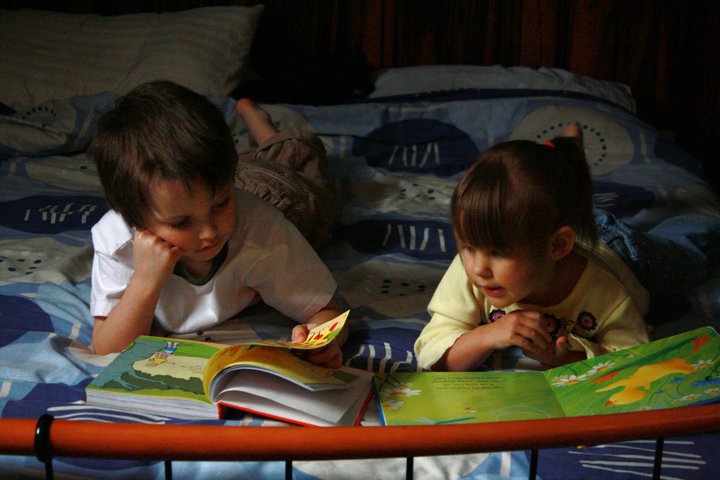
  4. Enjoying books together.

    When I thought he was ready, I introduced Prince to the first ‘Jolly readers‘ books.  In retrospect I think I did this a bit too early, and I did find that I had to take a break and restart again later on (we first started these when he was four).  I think the ideal time to progress onto the next level is when the child is showing an interest, and this progress should be a natural flow, rather than a segmented step up.

  5. When Prince was five we made our way through the next level of Jolly readers, and began the third level. By this time his reading had improved, but the requirement to read for an hour everyday (this was about how long it took him to get through a level three book) was too much. Although he didn’t put up much of a fuss, I could see that the task was too hard for him, and as such was affecting his enjoyment of books in general. At this point I decided to take a break from any set reading schedule, and just let him do what he wanted with his time for a while.
  6. Since then I have not gone back to any form of ‘teaching’ reading, and it has been during this time that his reading has improved most dramatically! It took a little while – a few months – but I found that he started to enjoy reading so much more once the pressure to learn was taken off of him. And because he enjoyed it, he worked at it. He figured things out, asked questions and persevered until he could read the books he wanted to read. As his ability continues to increase, he stretches himself further and further, and so progresses without me needing to do anything more than simply answer questions like ‘what does that say?’ What could be easier than this?!

Overall, the single most important piece of advice I would give in teaching your child to read, is to enjoy books as a family. Enjoy them together, encourage them to value books of their own, let them see you reading, read out loud, create special reading times. Because out of enjoyment, comes learning.

Prince still has a lot to learn, of course – he is only six! But I am confident that he will pick up what he needs to know as we go through life together, taking opportunities to learn as they present themselves, and enjoying the process of reading for pleasure.

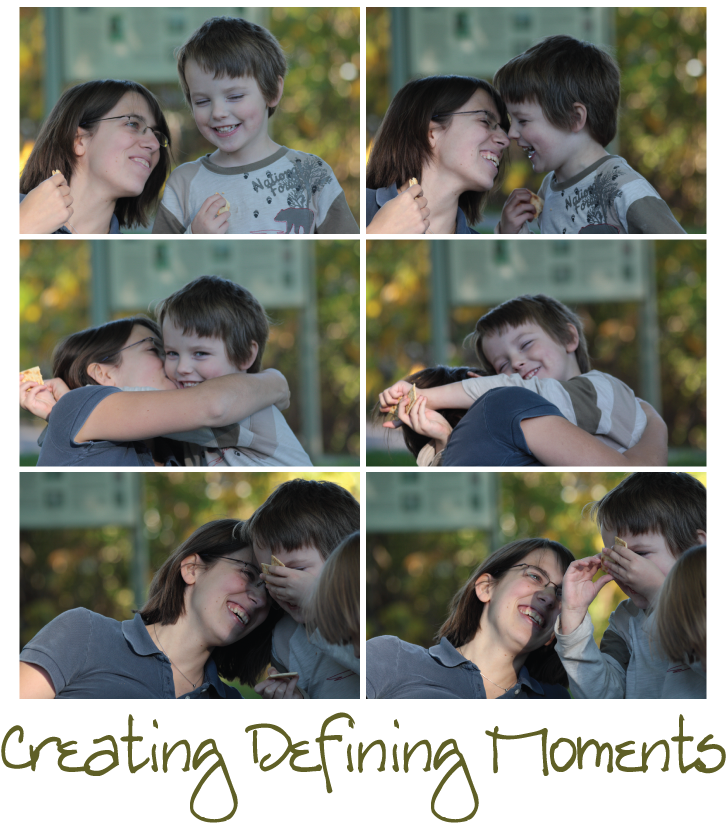
Defining Moments

When I think back over my childhood, there are certain moments, conversations and events which stand out in my memory. Usually they were nothing special at the time – just a passing comment or a one-off situation – but as I grew older they stayed with me. And now, when I contemplate them, I see that each one has played a part in who I am now.

It occurs to me that the people who said and did those things in my childhood had no idea they were forming such a big part of my character. I’m sure they didn’t know that their words would stay with me for the rest of my life. In all likeliness, they don’t remember the situation themselves now. But I do – clear as day. I can hear the words and recall the feelings from years ago.

If that is the case with me, and I’m sure I’m not alone in this, then it is also probably going to be the case for my children. And for your children. Every moment we spend with them, every word we speak, might be the one to stay with them forever. We have no idea if it will be the careless cross word we threw out in frustration; the tender hug and kiss after a disciplinary issue has been resolved; the word of spiritual encouragement and inspiration.

How careful we must be. If the memories I want my children to live with are ones of love and joy, then I must intentionally create many opportunities to foster those experiences. Some of the memories that stay with me are positive – I remember one particularly encouraging comment made to me, that I still strive to live up to today. Some, however, are negative. There is one memory that still hurts to recall, as the unfairness is as clear to me now as it was when I was a child.

The defining moments in our children’s lives could come at any time. Are you and I armed and prepared with positive experiences for our children? We are not perfect, and we cannot guarantee that our children won’t have any unhappy memories. But if we can increase the odds. Let us stay aware of the influence each moment can have in the lives of our children, and strive to make as many of them as good as possible.


To my Prince

Last week was one of the busiest weeks I’ve had in a long time (hence the lack of blog posts). There were many things going on, but just one I want to share with you – my Prince turned six!

Baby Prince

Every year on his birthday I think back to my early days of motherhood, when Prince first came into the world. I remember how tiny and perfect he looked in my arms when I first held him. He had big dark eyes that looked quietly up at mine, and his skin was unbelievably soft. He had this cute little swirl on each ear lobe, and if you look closely you can see they are still there today 🙂

When we found out we were having a baby boy, we decided to give him a middle name that honoured God.  We chose “Samuel”, because he was a gift to us from the Lord. And what a gift he has been! Today I dedicate this post to him, and all he is to me.

To my Prince:

You are one of the greatest joys in my life, my boy.

I love the way you delight in snuggling me, and even though you are so big (nearly my size!) you still climb onto my lap and wrap your arms around my neck so tight.

I love the way you are a kind and caring brother to your little sister. You look after her when she is worried, you affectionately enjoy her cute little ways, you share and play with her nicely, and you teach her things that you know.

I love the way you are passionate about things. About drawing, about ocean creatures, about Octonauts, about Bible Snuggle time.  You take great care over things.  You notice little details that other people miss.  You look at the world in a way which opens up my eyes to a new and wonderful point of view.

Love.

I love the way we laugh together over silly and funny things. I love the way we enjoy stories together, the way we talk about new things, the way we sign ‘I love you’, the way we sing together at bed time.

I love the way you obey even when it is hard. I love the way you pray. I love the way you practise being a gentleman, and hold the door open for Princess and me. I love the way you seek to be strong like Daddy, and to take the leadership as a man when he is not there.

As you turn six I want you to know that you are so very, very precious to me – and yet you are even more precious to God. I pray that you will daily give Him your heart and allow Him to lead your life. I pray you will have strength to stand firm in faith even if others fall down. I pray that you will be filled with the Spirit and speak with wisdom and understanding. I pray you will give your life as a daily sacrifice to God, which is your reasonable act of worship. I pray that you will find a wife to help and encourage you as you live out your faith, and that your marriage will be a strong example of the love of God. I pray you will be a leader in the church, able to teach and willing to serve. I pray you will become a father who knows how to train his children up in the ways of the Lord. I pray that you will love others with passion, and always search out ways to do good.  And I pray you will always know that I love you.

With all my heart,
Your Mommy

Of men and muscles

For physical training is of some value, but godliness has value for all things, holding promise for both the present life and the life to come.
1 Timothy 4:8

Every night I watch my brother and husband work out in our lounge. This started about two weeks ago, due to their desire to flatten their tummies and grow their muscles, and they are pretty faithful to do it every evening. Sometimes they even cajole me into joining them, but I have to admit I prefer to just watch… 🙂

We live in a world where health and fitness is seen as somewhat of a god. People join gyms, buy protein shakes from health food shops and sign up to all kinds exercise classes. Children are taught about the value of regular exercise, cigarettes are legally obliged to come with huge health warnings, and mothers are given information on post-partum ways to work out as soon as possible after giving birth.

Now there is nothing wrong with being healthy – if you’ve read my previous posts you will know that I myself am concerned with helping my family to stay healthy by eating the best kinds of food we can afford. Being healthy is great – but it’s value is a limited-time offer. You see, we can be the healthiest, fittest person on earth, who never gets sick and avoids cancer, diabetes and heart attacks. But in the end, health is only valuable for this life. When you die, health and fitness won’t be an issue! Godliness, however, has eternal value.

Prince takes every opportunity to strengthen his physical muscles. Do we take every opportunity to strengthen our kids’ spiritual muscles?

As parents, we need to keep this truth in mind as we train up our kids. It’s easy to spend hours of time researching how to give your kids the best nutrition for their growing bodies. It’s easy to spend money and time enrolling them into sports and gymnastics, knowing that you are supporting their physical well-being. But more than all that we need to be seeking after ways to regularly feed them spiritually nutritional food, and find ways to encourage them to exercise godliness.

One of the reasons people seek after health is to avoid getting sick. They don’t want to go down with the flu or risk a heart attack by clogging up their arteries with grease. In the same way, we need to exercise godliness so that we can avoid falling into sin. We should be aiming for peak spiritual fitness – for ourselves and our kids. We need to give our families the best spiritual nourishment available to strengthen their souls, so that they will be able to resist the harshest of temptations.

My little boy loves to compare his muscles to Daddy’s muscles. He take joy in seeing how strong he is, and even takes it upon himself to exercise in the hopes of getting stronger as quick as possible! My hope is that I can teach him to have the same kind of passion for developing spiritual muscles, because this will last him for eternity.

A joyful heart

A joyful heart is good medicine, But a broken spirit dries up the bones.
Proverbs 17:22

The life of a child is like a swing – they seem to go from having the best of fun to total disaster in one quick swoop! One of the challenges as a parent is helping them learn to moderate this roller-coaster of emotions, identify what the important things of life are, and make the choice to have a positive outlook.

My prince is going through a time of particular challenge in this area at the moment. It seems as soon as something doesn’t go the way he would like he reacts as if his world has just come crashing down. I don’t say this in jest – in actual fact it is something I find hard to deal with. It is tough to balance understanding that little things are important to children, with teaching them to respond well to disappointment.

In hopes of encouraging both myself and others, here are seven ideas for dealing with the emotional downs in our children’s lives:

  • A joyful heart is GOOD!

    We love the Steve Green ‘Hide ’em in Your Heart‘ Scriptures songs. One that we often use when one of our kids is feeling down is ‘A Joyful Heart is Good Medicine’. This reminds children that being joyful can work like medicine, making us feel better.

  • Make it a habit to talk about what the most important things in life are – not just when the kids are upset, but also when they are enjoying something. Reinforcing this over and over will – hopefully! – help them learn to let the little things go and keep their minds on the big picture.
  • One of the top ten children’s movies from yesterday’s post was ‘Veggie Tales: Madame Blueberry‘. This teaches the motto that “a thankful heart is a happy heart”. We use this phrase (and accompanying song) from Madame Blueberry to help the kids remember to find things to be thankful for in every situation, and show them how this makes them happy.
  • Take time to acknowledge and understand that things can seem important to children even if they are not important to us adults. Reinforce the idea that sad emotions are okay – but that we must learn to deal with them in the best ways. By making our children feel heard and understood, we will help them to move on towards joy.
  • Something we invented is a ‘blessings walk’ – or a blessings drive, blessings lunch, or whatever else we happen to be doing at the time. When a child is tempted to be sad about something they don’t have, we take turns naming blessings in our lives and pretty soon the discontent disappears.
  • Model appropriate emotions yourself. Kids learn to imitate what the see, so as parents one of our greatest teaching tools is our own behaviour. They say actions speak louder than words, but I think what speaks loudest is actions matching up with words. When we model appropriate ways to deal with disappointment, and a heart focussed on the things that truly matter, our kids will be able to see the good fruit in our lives and be more likely to follow suit.
  • Teach the concept of choosing our emotions. Even as adults this can be tough, as we often think we are at the mercy of our feelings. Training our kids from young that we have a choice about how we feel will set them up for a more positive future.

« Older entries Newer entries »