Listen – kids are people too

One of the blessings of having a good memory is remembering what it was like to be a kid. I had a great childhood, really – full of love, fun, and Little House on the Prairie with my bestie.

But I also remember some of the frustrations. Most clearly, I remember being frustrated when adults assumed they knew what I had done/was going to say/felt.  I can’t remember any specific instances, but I do remember the feeling of not being heard.  And as I grew up I was determined that my own children should not have this same frustration.

As a mom now, I find this is easier said than done. It is so easy to assume I know what’s going on in my children’s minds; to assume that I know the whole story behind a disagreement between siblings; to assume I know how it feels and the reason why my child is crying when I say ‘no’ to something. But the truth is, I don’t know everything. And so, I make an effort to listen to my children’s explanations and points of view, and I try hard to avoid making assumptions. I don’t do this perfectly, sadly. But I have a story which illustrates so clearly why I am glad I try, and how blessings abound when I succeed.

A couple of years ago Prince and Princess where playing in the lounge. Prince had left some of his toys unused on the table. After a while Princess, sitting on the floor in the middle of a game, needed an extra character, and seeing the unused toys on the table and asked,

“Prince – can I have your penguin?”

Prince look at her uneasily. I pricked up my ears to listen in, wondering if he would take this opportunity to be generous (something he had been struggling with a lot recently).

“Well…” he said, “That’s a very special toy to me. Couldn’t you have one of these instead?” Prince offered her two or three other toys.

I was disappointed. I felt angry, even. He just couldn’t seem to shake this selfishness – he wasn’t even using the toy! But instead of demanding he give her the toy and lecturing him on being kind (which is what I felt like doing), I stopped and thought about how to act. I then asked him a question.

“Prince – why don’t you want Princess to have the penguin? You’re not using it.” I said this simply, not accusationally. I genuinely wanted to know why he wasn’t giving her the penguin. What was stopping him?

Prince looked up at me, slightly teary-eyed. “Well – it’s very special to me. It’s one of my first big-eyed-toys! But…” He hesitated, as if needing my help, “does she want to have it forever?”

Prince and his penguin in their early days.

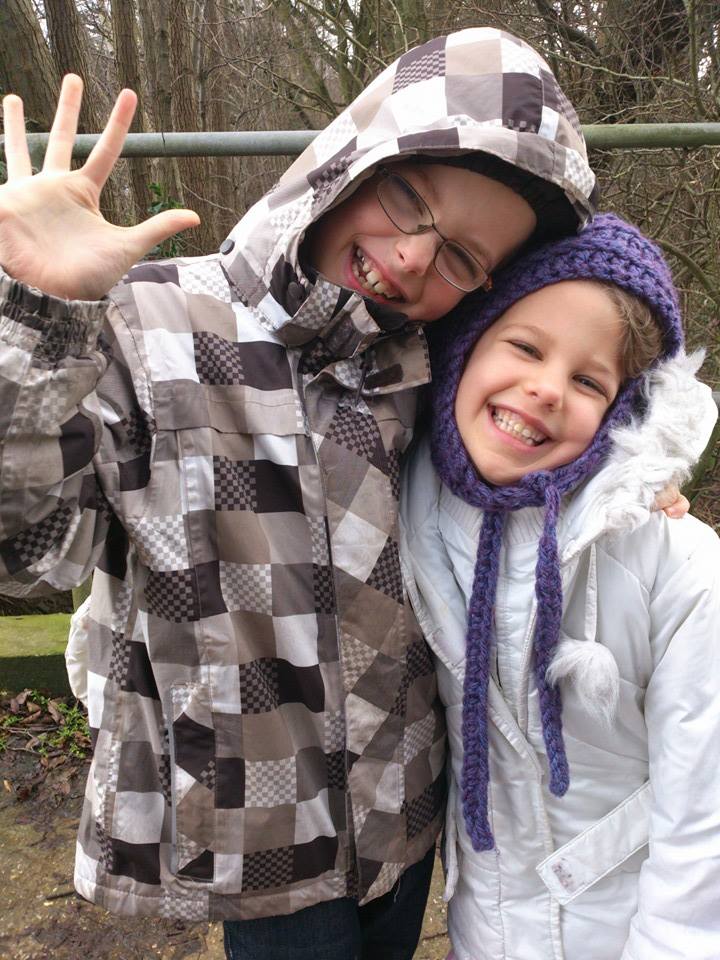
Prince and his ‘big-eyed’ penguin in their early days.

Suddenly it dawned on me. My prince – my precious, darling, oh-so-literal Prince – heard his sister ask to ‘have’ the toy, and assumed she meant ‘have to keep forever as her own’.

“No, darling,” I explained, “She just wants to use it for this game!”

Prince looked relieved. “Oh!  Okay!” He passed her the penguin immediately.

I was convicted of my anger. Here I was assuming Prince was being selfish, when in actual fact he was being extremely generous. Remember – he chose some of his other own toys to give his sister ‘forever’, as he understood it. I’m so grateful that I chose to ask him to explain his own perspective on the situation. It blessed me, as I saw his generous heart; and it blessed him, as he was not unfairly accused of selfishness.

I think back on this situation often, and use it to remember that kids are people too. They deserve the respect of being listened to and heard. Their understanding, opinions and explanations are not always what we think they will be.

Let’s stop assuming we know it all, and take time to really listen to our children.
Ten things I love about home education

I met someone recently who said to me “I’ve always thought I would homeschool my kids if there were no other options.” I smiled, and replied, “I’ve always thought I would send my children to school if there were no other options!”

A lot of people look at me in awe when they find out that we home educate.  They say things like, “You must be so patient!”, “That must be hard!” or “I could never do that!”.  Well, the truth is that is can be hard, I  have to learn patience, and actually you could do it if God called you to it.  But my most common response to comments like these is a broad smile accompanied by “Actually, I LOVE it!”  And I do.  I really, really LOVE home educating my children.

So here is a list of just ten things I love about home education, in no particular order.  These are not necessarily reasons for homeschooling – you can find out more about why we choose to homeschool here – but rather some of the aspects of home education that I personally enjoy.

Whatever type of schooling you feel God has called your family to, I hope you enjoy – and perhaps find some inspiration in – this list.

  • Seeing first-hand the progress my children make on their learning journey.
    Whilst parents of schooled children can certainly track their progress to a degree, I love being an intimate part of that journey, witnessing the struggles, the light-bulb moments, the eagerness and the delight.
  • Being a key decision maker in the educational content, timing and presentation.
    I feel privileged to be able to make choices about what my children learn, how they learn it, and when they learn it. We are not constrained by a classroom full of needs, so learning can be a personalised timetable, allowing children to take time when needed, and rush ahead when talented.
  • Learning out & about!

    Learning out & about!

    “School” in PJs, the park, the car or the couch.
    I saw a funny video once, in which a homeschooled teen talked through common myths about homeschoolers, debunking each one in turn.  But the last one, he acknowledged to not only be true, but to be one of the greatest benefits of home education – doing ‘school’ in pajamas!

  • Sharing my faith throughout the day.
    Being with my children all day is not boring or difficult – it is a blessing beyond any other.  It gives me countless opportunities to show them grace, love, joy, perseverance, forgiveness, petitioning in prayer and personal Bible study.  This can obviously be done with schooled kids as well, – but with long school hours, homework and extra-curricular activities I have heard many parents talk of how busy they are and how little quality time they get to really spend with their children.
  • Crowd-free day trips and holidays.
    This is a sweet benefit!  We always try to go to the pool, the zoo, the museum and on holiday during school term.  This saves money (always helpful in a one-income family) as well as having SO – MUCH – SPACE!  Awesome.
  • Sibling love.
    Another frequent assumption about home education is that siblings would simply go crazy and kill each other.  Let me put you at ease on this: not only do they not kill each other (a definite bonus), but in my experience homeschooled siblings tend to get on very well! My own children are best friends. I am not saying they never argue or get frustrated with each other, but every homeschooled family I know has siblings who are friends. Every one! And I think this is because they spend so much time together, not despite it.
  • Best of friends!

    Best of friends!

    Learning together.
    I don’t know about you, but I don’t remember most of what I learned from my schooling! But now I get to learn it all again, and this time I’m really interested.  People often ask if you have to be a qualified teacher to home education.  You don’t.  Learning alongside your kids is not only acceptable, I think it is desirable.  When children watch adults seek out education and enjoy learning new things, they tend to follow this example.

  • Learning year-round.
    Learning is a life-time occupation.  Having a natural learning approach means we don’t really ever ‘break’ from schooling.  Rather, we are always open to learning, and welcome it as a natural part of life. We do have periods which might look more or less like school to the outside observer, but in truth we aim to keep an attitude of learning in everything we do, all through life.
  • Peaceful paced life.
    Some homeschool moms might read this and think I’m crazy.  Home education is not always calm and quiet, it’s true. But it allows me to set the pace I think is right for my family, and most of the time I find this is a pace of peace. I don’t have to rush my children out the door at 8 am, trying to avoid the school run traffic. I don’t have to force my four-year-old to spend six hours at school and pick her up exhausted (okay, she’s actually five now – but I was glad of it last year). Whilst we still aim to get up and make most of the day, it is done with a spirit of joy and peace rather than obligation and force.
  • Taking responsibility for my children’s upbringing.
    I find this a hard one to explain without causing offence, so I make a disclaimer here: I totally believe that each family MUST make decisions regarding schooling options for themselves.  You should not homeschool because it is right for my kids – only if it is right for yours.  And as long as you have considered the individual needs of your own children, your family unit, and sought God’s guidance on this fundamental aspect of parenting then I respect whichever schooling option you have chosen.  If you have not prayefully considered the options, I beg you would do so.  Kids spend so much of their time at school that to say ‘it doesn’t matter’ is just not true.  I am thankful for the example set for me by my parents, and I am thankful that God has chosen our family to be home educators.

Dedication

If there’s one thing I’ve learned about myself in the thirty (eek!) years I’ve been alive, it’s that I go through phases. Not necessarily like the phases in the Leadership Education post previous to this, but rather phases as in “Now I will Learn Italian”, “It’s Time to Focus on Writing” or “Keeping the House Clean”.

WordPress kindly offered me a glimpse of my blogging “achievements” in 2013. They displayed pretty fireworks and then told me I’d written a grand total of… seven posts in the whole year. Out of interest, I compared this to my 2012 report, and was not too surprised to find in that year I had written fifty-four posts. PHASES.

It could be called the ‘phase-eeze’, and I’m relieved to say I come by it naturally. My mother has it. My grandmother has it. Even my great-grandmother had it. (What hope does my daughter have, you ask? None, I predict.) In actual fact I don’t think phase-eeze is necessarily a bad thing. It is often an attack of the phase-eeze which kick-starts a new interest or develops an old skill. I find that working with it, instead of fighting it, means I can pour myself into one project at a time and take advantage of the energy which comes from motivation for that particular topic.

Four generations of phase-eeze girls :)

Four generations of phase-eeze girls 🙂

However.

I feel the need to balance my phase-eeze with some longer-term dedication. You may or may not be a regular reader of my blog. (I use the term ‘regular’ loosely, because there is nothing ‘regular’ about fifty-four posts one year vs. seven the next.) You may or may not be interested in becoming a more regular reader of my blog. But I have decided to commit to TRYING to become a more regular blogger. The reasons for this are numerous, but a few are:

  • To exercise self-discipline
  • To provide a creative, consistent way for me to share my faith, thoughts, and life with others
  • To develop my writing skills
  • To set an example for my children
  • To remind me to think through and develop my opinions on important life matters
  • To record family life for the future
  • To (I hope and pray) inspire others to live for God with every moment they are given

And so, as we move through 2014 I hope you enjoy my attempts at blogging more often! Feel free to give me a metaphorical nudge if you think I’m slacking. And feel free to stop reading if you think I’m boring!

May God bless us all as we live for Him.

Leadership Education

I am currently reading Oliver & Rachel DeMille’s ‘Leadership Education: The Phases of Learning‘. I was directed to it via a blog I enjoy regularly, Simple Homeschool. Jamie Martin does a fantastic job of explaining Leadership Education in practice over there, and I recommend you check out her many posts to find out more about what it’s like to live this philosophy.

Although I am not even half-way through this book yet, I have found it to be inspiring, practical and fitting with my own ideals of education. The focus is on educating a child in the things that matter most, first. Then it follows up with inspiring a love of learning which will lead children to seek out a superb quality education. It talks a lot about tailoring education to each child’s unique talents and gifts, and seeing the goal of education as preparing them for their personal ‘life mission’. This might be in international ministry, an office job, a world-renowned scientist or a homemaker.

Reading 'Leadership Education' on my Kindle, thanks to my amazing Granny who just knew I "needed" one!

Reading ‘Leadership Education’ on my Kindle, thanks to my amazing Granny who just knew I “needed” one!

After reading through the theory part of DeMille’s book, I put together a personalised summary of the principles and beliefs that Leadership Education promotes. I emphasise personalised for two reasons: First, having not yet read the whole book I may have misinterpreted some aspects, as I don’t yet have the whole big picture. Secondly, I have included notes and quotes which reflect what I take from the book, which is not always exactly what the book means (though in most cases it is). I originally wrote this summary for a friend, but found it a helpful overview myself. I share it with you below, and hope you too find it inspiring, encouraging and useful.

I would especially like to hear from others already using Leadership Education, or those who have read the book and have more comments to offer about it 🙂

Please note that all text in quote marks come directly from the book.  I have not attached page numbers as Kindle versions don’t provide that information.  If you would like to know exactly where a specific quote comes from, please do ask and I’ll provide you with a proper reference.

Basic Premise

There are two main methods of education:

  • Conveyor belt
    • offers all children a set knowledge base without consideration of their specific gifts
    • expects all children to learn through the same (or at least, very similar) methods regardless of age
    • focusses on academic achievement as the main goal
  • Leadership
    • focusses on each child’s unique gifting and starts with this as a basis for learning
    • believes that children learn differently at different stages of life, and adjusts methods accordingly
    • lays a foundation of morality, spirituality and character development, believing this is of central importance to all other learning

 Theory

There are six stages of learning that students should progress through chronologically

‘Nearly all development occurs in stages or phases. This is also true of education. We believe it is important to take advantage of each phase of development to its fullest.’ Ages for the stage are guidelines only, as each child is unique in development.

Foundational Phases

‘over-programming’ during these phases can cause conflict in the child. This is a crucial time to figure out ‘what is success? What is maturity? … What is my relationship with God? What is my relationship with others? What is my duty? And so forth.’ ‘When we give inappropriate attention to academic achievement during these phases, it can teach our children that they dislike academics because everything is “hard” and “boring,” and/or offer our children an alternative source of self-worth that is inferior to a genuine and positive self-concept resulting from living according to true values such as faith, good works and accountability.’

  • Core:  birth to eight or nine
    • ‘During core phase we lay the foundation for all learning and service in the child’s life.’ The ‘curriculum’ is made up of values, relationships, identity and responsibilities.
  • Love of Learning:  eight to twelve
    • Pressure to learn formally in this stage can cause negative attitudes to learning. ‘These are the years when children dabble with learning, getting to know “what’s out there.”’

Educational Phases

‘During this period the bulk of a person’s “book learning” takes place.’ Through this phase the student will being to use about 70% of their time in intensive learning. Important topics are ‘our place in history and the cycles of society.’

  • Scholar:  twelve to seventeen for girls, thirteen to eighteen for boys
    • ‘At first, the new scholar may only study a few hours at a time, but … by the end of Scholar Phase, most student are studying well over forty hours a week.’ Students are still free to study their own choices of topics, though teachers should encourage and inspire them to ‘see the value, relevance, and excitement of studying other important subjects.’ Teachers should be careful not to ‘knee-jerk’ and require conformity to conveyor belt education at this stage, however some formal education at a college or similar is often useful for some topics. Mentors are key during this phase, and ideally fathers should be one of these. During these teenage years, ‘A leadership view replaces the conveyor-belt search for identity with a quest for vision and mission.’
      • NOTE:  there is a “semi-phase” before scholar, termed ‘transition to scholar’. I have not read further on this yet.
  • Depth: eighteen to twenty-four
    • ‘During depth phase, mentors asses student strengths and weaknesses, help students fill in gaps in their knowledge, go into real depth in their areas of strength and passion, and otherwise lead young people in preparation for their life mission and focus.’ As youth typically leave home for college/uni/work during this stage, it is vital that you prepare them to find mentors of their own who will encourage them wisely. This should be a time of mastering self-control and developing education to career-level.

Applicational Phases

‘Leadership Education will naturally be followed by a life of service and leadership.’ This is the time to carry out one’s personal mission work, and to have an impact on future generations. ‘The greatest component of the Applications Phases is not education per se; it is application of one’s education and whole soul to improving the world.  These phases do not have age guidelines, but relate more to the two periods of life as an adult, and then as an elder.

  • Mission
    • This phase is about ‘building the two towers of family and organization’.
  • Impact
    • This phase is about ‘changing the world to be whatever it should be for your grandchildren and their children’

 Learning Keys

There are eight keys of great teaching which can be applied throughout the phase, which enhance learning.

  • Classics, not textbooks
    • ‘Great works inspire greatness.  Mediocre or poor works inspire mediocre or poor learning.’
  • Mentors, not professors
    • Different emphasis ‘professors’ teach a set curriculum, ‘mentors’ find out student goals, talents etc. and ‘develop and carry out a plan designed to effectively develop his genius and prepare him for his unique mission.’
  • Inspire, not require
    • Lack of inspiration should cause the teacher to question ‘what do I need to do to spark their passion to do the hard work?’
  • Structure time, not content
    • ‘Great teachers and schools allow young students to follow their passions and interests during their study time and inspire them as needed to take on areas they may not initially recognize as interesting and desirable.’  This requires a degree of trust from the teacher, both in the student and the method.  ‘Students must have the freedom to fail in order to truly take responsibility for their own progress.  They must know that their education, their life, their mission, will hinge upon their own choices.’
  • Quality, not conformity
    • Resist the pull to conform to educational norms if they do not contribute to the lessons which need to be learnt at each child’s specific stage.  Also, ‘Great teachers inspire and demand quality, ever urging their students to higher levels of excellence.  They shun mere conformity and expect their students to think and perform to their ever-increasing potential.’
  • Simplicity, not complexity
    • Don’t feed students overcomplicated curriculums.  This fosters a dependence on experts and an attitude that he/she is not able to learn and understand for themselves.  Rather, ‘students study the greatest minds and character in history in every field, write about and respond to what is learned in numerous settings, and apply it in various ways under the tutelage of a mentor’
  • You, not them
    • ‘Focus on your education, and invite them along for the ride.  Read the classics in all fields, engage mentors who inspire and demand quality, structure your days, weeks and months to include study time for yourself, and become a person who inspires great education.’
  • Secure, not stressed
    • Try to ‘know what you are doing is right and that you are doing it effectively’.  Use your own system of knowing what is right to evaluate Leadership Education and see if you believe it is right for your family.  If it is right, then learn to do it effectively by taking advice from others who have done it before.  Being secure instead of stressed will result in peace, focus and joy in your educational journey.

Memories to remember

Some sweet and funny comments from my precious kids (Prince age 6/7, Princess age 4).  Enjoy!

Prince, after I kissed him goodnight, “You know, Mommy, girls are quite in style to me now.”

Princess, while watching me weigh myself: “Can I see how much MY feet cost?”

Prince: You know, Mommy, I don’t even know who I’m going to marry, yet!
Me: No, but God does. You should make sure you choose someone who loves God and will be a good mommy for your children.
Prince: Yep. I think I will go to town to choose my wife. I will ask everyone in town, ‘Do you love God?’ and if one says yes – I’ll choose her!

The beginning of Prince’s prayer on Friday morning at breakfast: “Dear God, thank you for this lovely day. Thank you that we are not having vegetables for this meal…”  (Oops!  I guess my vegetable passion hasn’t been passed on yet…)

Princess looked down at her feet while running in the park, and exclaimed, “My feet are going faster than I expected!”

Love these sweet and funny kiddos!

Love these sweet and funny kiddos!

Prince, learning about capital cities: “Which ones are the lower-case cities?”

Princess, on family night, picked up a chip from her bowl and exclaimed, “This chip is as flat as a pig!”

Walking home from swimming, the kids & I played ‘I Spy’. It was Prince’s turn:
Prince: …something beginning with ‘M’.
Mommy & Princess make some wrong guesses.
Prince: I’ll give you a clue – look all around you.
Mommy & Princess give up.
Prince: Molecules!

I asked Princess to give me a long kiss on my cheek (so that Daddy could catch it on camera). She looked at me sadly and replied, “I can’t, Mommy. Because one time when you and Daddy did a long kiss you said I couldn’t do that.”

Princess, praying before bed one night: I pray, Father Lord, that you will help me to love other people in a way to show them that I love them more than just princessey things.

Princess, writing a card at the table, spies Prince sleuthing in the hallway with a Nerf gun, and calmly comments: “Prince, I know your excellent plan is to shoot me.”

Prince, putting his arms around my neck and pulling me close:  Mommy – you’re my favourite of the physical things.

Princess came after a long and quiet period outside…
Princess:  I’ve been trying to rescue a snail from a spiders web.
Prince:  Princess, that’s very sweet.  But you should just leave it – that’s nature!  Just let nature do it’s thing.  You shouldn’t change nature.

Princess:  Who flushed that toilet?!
Prince: Me!
Princess:  Oh – I thought it was an invisible person.
Prince: There are no invisible people!
Princess: Except for the people who are…
Prince: Yes – like pick-pockets.

Vege-table

Here’s a tidbit of info about me: I love vegetables! And I love it when my dinner table is a vege-table.

Princess helping prepare our favourite fish salad.

Princess helping prepare our favourite fish salad.

Being a homemaker, I delight in cooking tasty, healthy food for my family, especially when I can do this on a budget. Vegetables are great in summer and winter, and I enjoy soups and salads all year round. Everyone knows they’re full of vitamins and minerals, but it’s not always easy to find yummy, easy recipes to incorporate them into your diet. So – here are two of my FAVOURITE vegetable recipes, which can be easily added to your repertoire of delicious vegetable meals.

I hope you enjoy using them to turn your table into a vege-table too 🙂

~

Super Quick and Easy Tomato Soup

INGREDIENTS:
1 Onion
6-8 Cloves of garlic
4 tins chopped tomatoes
Handful fresh rosemary (or about 2 tbsp dried)
Salt & pepper to taste

METHOD:
Chop onion and garlic. Fry onions in a large pot. Add salt, pepper and chopped tomatoes, bring to boil and let it simmer for about 10-15 mins. Turn off heat. Wash and finely chop rosemary. Add garlic and rosemary to pot. Blend with a hand blender. Serve and enjoy!

~

My Granny’s Best Fish Salad

INGREDIENTS:
Large tin salmon or other fish
Canned beans (optional)
1 small onion (red is sweeter, though I personally prefer white)
3-4 small/medium potatoes
Various salad vegetables (tomatoes, peppers, sprouts, cucumber, apple, etc.)
Mayonnaise and natural yoghurt
Vinegar (red wine is my favourite)
Olive oil
Piri-piri sauce or shake (optional for extra heat!)
Salt & pepper to taste

METHOD:
Chop potatoes into large bite-size chunks and boil (or cook whole and chop afterwards). Meanwhile, dice or slice the onion and put into a large salad bowl. Sprinkle with a generous amount of salt and add two or three tablespoons of vinegar. Next, chop and add your vegetables except tomatoes (and tinned beans, if using) to the bowl. Add the tinned fish, drained, and about 1/4 to 1/2 cup (in total) of mayonnaise and yoghurt, (also add your piri-piri if using). Mix this all together. Now add the potatoes and tomatoes, sprinkle again with salt, and with pepper, and pour over about 1/4 cup extra virgin olive oil. Mix again. Lastly, cut up leafy vegetables (fresh spinach and rocket is a favourite here) and add to the bowl. Don’t mix them in until ready to serve, then toss and serve.

The window to your heart

“And consider ships: Though very large and driven by fierce winds, they are guided by a very small rudder wherever the will of the pilot directs. So too, though the tongue is a small part of the body, it boasts great things. Consider how large a forest a small fire ignites. And the tongue is a fire.”
James 3:4-6

Words. Many lessons have been written on the power of words. The tongue has been called the strongest muscle in the body, and the Bible speaks of its power in the book of James, likening it to a rudder which can steer the whole course of a ship, or a fire which can cause devastation.

wordsAs a homeschooling Mama my kids hear a lot of my words! We talk about everything from history, to meals, to Lego, to toilet habits… I’ll stop there 😉  Being with my kids more than your average UK parent has made me think carefully about how I speak to them. I have noticed that it is easy to slip into the ‘I’m busy but I’ll nod and say “uh-huh” even though I have no idea what you said’ mode of conversation.  There are plenty of comic strips and Facebook images which joke about this. It seems to be a universal Mom thing. But it’s not funny. Now I know that you and I are busy people. But what do our conversations tell our children about our hearts… and their value?

When we speak to our children, we are showing them a little of our heart. Our words are a window. Not just our words, in fact, but our tone of voice, eye-contact, expression, and all those other non-verbal communication attributes. If I am staring at my computer and say the glazed “uh-huh” when Prince comes to tell me about how the latest GUP is the coolest thing, what are my words and actions telling him?Here’s a list off the top of my head:

  • I am selfish
  • I value other interests above him
  • I have no self-control
  • His effort is unimportant
  • He is not interesting to me
  • He is not high on my priority list
  • Computers are a god
  • It’s okay to ignore people

These are pretty shocking messages. Even more scary is the fact that even if I was doing something REALLY important, he is still getting these messages. As I see it, if I don’t want him to get these messages I have two options: 1) Put him first whenever possible: Stop, look at him, smile, appreciate, ask more questions (rather than hoping he hurries up and finishes talking), hug him, praise him. OR 2) if what I am doing is pressing and important: Stop, look at him, explain “I’d love to hear what you’re saying, but I’m just in the middle of something urgent. I’ll get back to you as soon as I can, and you can tell me all about it, OK?” Now he knows that he is valued highly, but sometimes other issues need to take priority for a time. (Side note: we should balance this advice with make sure our children learn the importance of not interrupting, that they are not the only thing in the world which matters, etc. But in my experience this is a far less common problem, and what most of us really need to work on is giving the message of love and value.)

The busy mom syndrome is just one example of the way we talk to our children, but here are some other messages that our words & non-verbal signals may be telling our children:

  • I don’t like you
  • I’m impatient
  • I value obedience more than a right heart
  • I am inconsistent
  • You are stupid
  • You are insignificant
  • You should be perfect
  • My desires are more important that yours
  • You don’t deserve love
  • Anger can be expressed without love
  • What you do is not important
  • It’s okay to be rude
  • Self should be valued above others
I want to be my kids' best friend!

I want to be my kids’ best friend!

Again, a shocking list. And again, it’s even more scary when you stop to think that it’s not just the ‘bad’ parents out there giving these kind of messages. It’s us. We need to stop and take a good look at what we say and how we say it when we talk to anyone – but especially our children. We must not assume “they know that I love them”, but rather SHOW this in the way we talk. We must let our kids know that we respect, like, love, and appreciate them. How many kids would choose to be friends with someone who preferred the company of Facebook over them, who lost their temper with them on a daily basis, who expected them to be perfect and never thanked them for a job well done? I sure want to be my children’s best friend. And one step to this I believe is learning to speak to them in love all day long, as a friend, mentor and mother.

Our words are a window into our hearts that our children look through each day. Sometimes this window may not reflect accurately what is inside, but it is still what our children see. And sometimes this window is more accurate than we like to admit.

Behind the Scenes

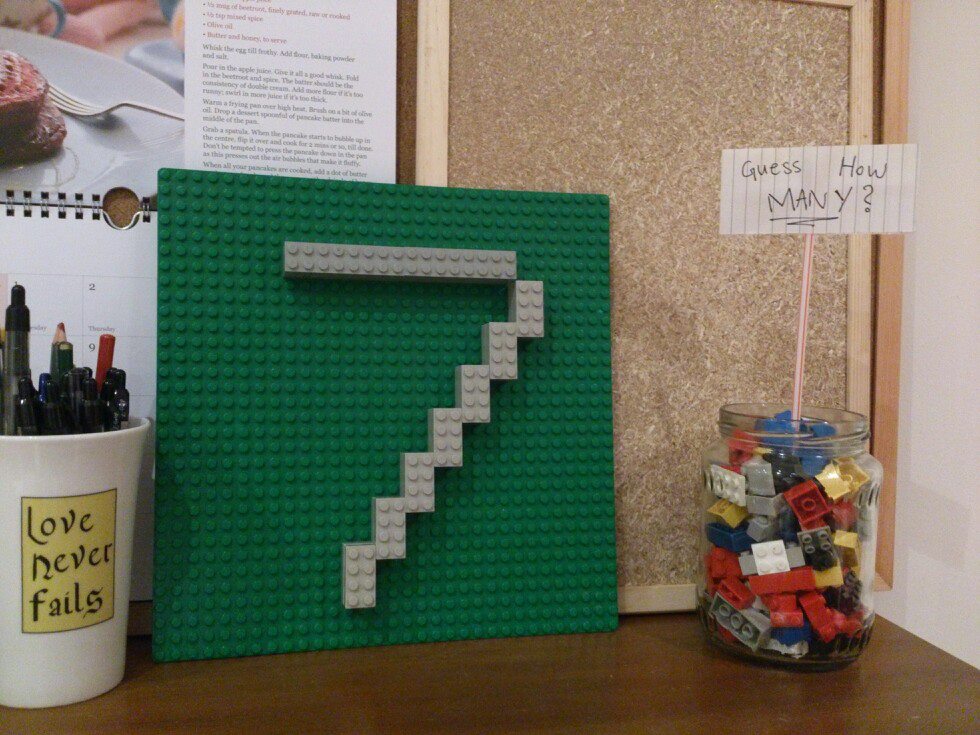
Seven is a really big number.

Seven is a really big number.

I’ve recently started a new schooling system. With the advent of my Prince turning SEVEN (shock, disbelief) I have felt the need to take my relaxed, interest-led, natural learning method a notch up the formality rating. Whilst I still absolutely believe in the benefits and necessity of keeping learning fun, relaxed and relevant, I also have found that some days my kids need a little prompting. With their limited world view there are some things they don’t learn about, simply because they don’t know about it. This is where I come in! I see my role as ‘Chief Instigator and Inspirator‘. (Yes, I know that’s not a word.  But it should be.)

When I let my children learn naturally, I am usually surprised at how much of what they do would be classified as ‘official schooling’ if I had instigated and formalised the learning which happens. For example, yesterday Prince saw a French book lying around so he picked it up and began reading. Sitting next to him, I peered over his shoulder and pointed out that if he read the helpful translation lists at the top and bottom of the pages he would then be able to understand the cartoon strips. With a little help he then read two pages of French conversation, practicing pronunciation and extending his vocabulary! This is my ideal:  unprompted interaction between kids/parents/tools produces effective learning.

But natural learning is not what this post is about.  Why?

Whilst I see first-hand the benefits of learning as opportunity and desire present themselves, I have also seen that there are some things I’d like my children to know which don’t come up in our everyday life very often. Also, there are some days when I feel we have done very little learning of any kind, and although I am comfortable with this every now and then, I desire to foster a habit of industrious activity rather than laziness. SO! Here is my new and improved ‘Natural Learning with a Structured Twist’: It’s very simple really. I started by drawing up a Monday – Friday timetable. Under each day I put in topics that I think are important to make sure we hit from time to time. Over a few weeks I tweaked this until I ended up with this:

My super-secret, under-cover Spring '13 timetable!

My super-secret, under-cover Spring ’13 timetable!

Now, I know how formal this looks. But looks can be deceiving. The key to keeping this natural is this: KEEP IT SECRET! I don’t let my kids know that behind the scenes of our seeming unstructured day is a chart which prompts Mommy to casually say, “Hey guys!  Let’s play ‘Flags of the Word’ together!’ on Tuesday. Or that when I start playing a French computer program on Wednesday, and they just happen to be sitting close by, I am actually taking advantage of their inability to stay away from electronic media, and capitalising on the attention I know they immediately pay to All Things Computerised.  As they listen and – usually – come and join in with me, they are absorbing new words, better accents and French sentence structures without any idea that they are ‘being schooled’. When I write maths problems on our activity board for ‘fun’, this is exactly what they think it is – little do they know that it is actually Friday’s ‘Basic Skills’. In reality, this is not a timetable for the kids – it’s for me.  I am kept accountable through the structure, then implement it through life in as natural a way a possible.

Another key to the natural flow of this new system is flexibility.  One of the joys of home education is it’s flexible nature, and I never want to lose this.  If we don’t get to History on Monday – never mind.  We’ll pick it up on Tuesday… or next week.. or we’ll do double another time… or we’ll forget about it.  Since we don’t break the year up into terms and holidays, but rather school throughout the year (and indeed, the days and weeks), there is no pressure to make sure we cover every thing, every day.  If we miss something, I can always put it down to an inset day 🙂

Reading is Princess's newest learning passion!

Reading is Princess’s newest learning passion!

Lastly, I hold to my belief that children learn best when they are self-motivated and interested. If a child is showing a new passion for music, then take time to indulge that for a while, even if it means cutting back on writing. If, as happened to us, a recent trip to France sparked an enthusiasm for French, then this is a great time to become immersed in French books, programs and conversation. If science needs to take a back seat for a while, so be it. You can always come back to those subjects you left behind, but you can’t always recapture the spark of excitement which lives in your child temporarily.  Don’t miss it – nurture it!

I know that formality, structure, and curriculums are the favourite choice of many home-educating families. But if you’re looking for something a little more natural, then maybe you want to create your own Behind the Scenes timetable.  And maybe you have some other great ideas for keeping the balance between structure and freedom?  Please share them with us all 🙂

The God of Second Chances

 ‘As surely as I live, declares the Sovereign Lord, I take no pleasure in the death of the wicked, but rather that they turn from their ways and live. Turn! Turn from your evil ways! Why will you die, people of Israel?’
Ezekiel 33:11

I love this verse. I remember the first time I read it, printed on the back of our bathroom door where my Mom regularly put up prayer lists and encouraging Bible verses. What stuck me then, and continues to strike me now, is the desperate love God has for His people. He desires so much for them to take strength and try again, and He wants more than anything to show them mercy.

God's love and mercy are endless!

God’s love and mercy are endless!

I also love the Veggie Tales movie Jonah. It does a fantastic job of bringing out the themes of compassion and mercy, and uses the story of Jonah to demonstrate that God both shows these to us and desires us to show them to each other. As Christians we know that God is forgiving, and that His love is never-ending, but I think this head-knowledge doesn’t always translate into heart-knowledge. The Bible is full of examples of human failure followed by Divine forgiveness:

  • Adam & Eve brought sin and death into the world – yet the world has been saved through Jesus
  • David committed adultery and murder – yet is a lasting example of a man after God’s own heart
  • Nineveh was a city full of wickedness – yet it is a story full of hope and forgiveness
  • Paul was an infamous persecutor of the church – yet he became an honorary apostle and prolific church-planter

With such a heritage of sinners and such examples of forgiveness, it should be easy for us to remember that this grace is for us, too! But sometimes, it isn’t easy. Perhaps we have a tendency to get too bogged down with the sorrow of sin. We dwell on the wrong we – and others – have done for too long. Whilst sin is always serious and requires repentance, when remorse inhibits joy and renewed enthusiasm to ‘try again’, I think we are falling into another trap which Satan puts in our path.

There are many things I fail at frequently. Some of them may not even seem important to others, and some of them are more obvious.  A personal example:

Because of the Lord’s great love we are not consumed, for his compassions never fail. They are new every morning.

Because of the Lord’s great love we are not consumed, for his compassions never fail. They are new every morning.

I was thinking the other day that it has been too long since I incorporated prayer into my devotional time with my kids. I know how important it is, yet it had been months since we included that aspect into our devos! So yesterday, we started again. It is great! Do I wish I’d never stopped? Yes. But God is a God of second, third, fourth, fifth…. chances. So when I realise my mistakes, I have joy in knowing I can be forgiven yet again and move on with renewed intentions.

So if you have let your housework get out of hand and feel a little guilty – say sorry to whoever needs to hear it then stop feeling guilty and take the chance to try again. If you have forgotten to read your Bible in weeks… months… years… – pick it up and thank the Lord for another chance to read. If you go to bed tonight and realise that today, like most other days, you have not been patient with your children, don’t dwell too long in the sorrow of this – ask forgiveness then praise God for His grace and for a new chance tomorrow.

And if you see someone who seems to have it all together and you start to feel guilt and jealousy creeping in – remember they are just another David, Paul, or Ninevite, who has taken another chance from the God of grace. May we always take joy in the steadfast love of the Lord, and His new mercies each morning.

Guest Post: Avoiding Frustration

Heading Things Off At The Pass
Or…
Ways to help avoid frustration in our children

  1. Pray for your children to have peace, contentment, flexibility, generosity & calm.  That’s a big ask but God is a big God… and it is important for us to do the asking on our children’s behalf.
  2. Emphasise foundational concepts regularly.
  3. Help your children learn perspective by pointing out regularly what is (and isn’t) of first (i.e. eternal) importance.
  4. Set clear, realistic expectations AND make sure they have been heard & understood.  My personal favourite – calling gaily from the kitchen whilst making supper (with the extractor fan on) into the lounge (where someone is playing the piano) that supper is nearly ready and someone must please set the table – is NOT what we are looking for!

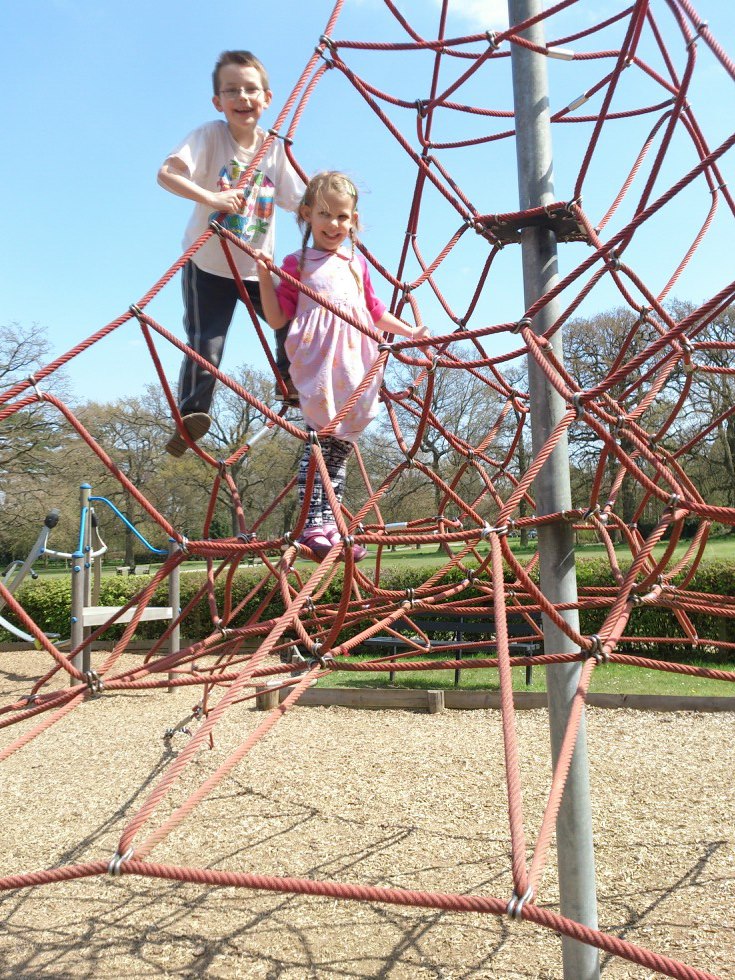
    Conquer the entangling web of frustration!

    Conquer the entangling web of frustration!

  5. Give a warning before you want your children to change what they are doing.  E.g. when they are about to need to tidy up/go out/come for a meal/come inside/stop playing. My children are more often happier with having to stop playing if they can finish a ‘last chapter’ of their game; it lets them get to a suitable stopping point, which is more satisfying than stopping in the middle of an exciting bit.
  6. Early Intervention Plan.  Distract your child from potential/early frustration & come up with alternative courses of action.
    – E.g. If a child is looking lost for something to do/someone to play with, offer them a menu of options to choose from including, if at all possible, some things with you.
    – E.g. If a sibling has done something a child did not want/like, suggest ways the child can be gracious to their sibling – and make that sound like an appealing thing to do so they can be just like Jesus – then offer the aforementioned menu of options for things to do (possibly including doing something nice for the sibling)
  7. Ask YOUR CHILDREN to tell YOU what the right thing to do/say is.  This is a ‘double scoop ice-cream’ type approach:
    Scoop one: you can avoid them getting frustrated with being corrected/told what to do.  This is especially helpful if a) you are a long-winded communicator, like me and/or b) they are a child that needs frequent guidance…some children do.
    Scoop two: you are training them in the discipline of making right choices themselves. Obviously, if they are floundering, help them out – otherwise you start off a new cause for frustration, which is not quite the idea!!
  8. Ask questions, rather than jumping to conclusions.  If you think the situation they are in might be likely to trigger frustration in your child or if you spot their warning signs, asking discreet questions might either dispel your concerns or activate your early intervention plan, rather than you having to help them recover from a meltdown later.
  9. Patiently explain misunderstandings.  Often, when you are in the habit of asking questions, you will discover that there is a lack of understanding in your child. Explain things patiently and calmly, without laughing at the child or putting them down (which is more easily done than you would think – especially if they express themselves in a super-cute way – and can lead to insecurity in some children).

Isn’t it wonderful how when you write these things down they sound so easy and straightforward!  Since drafting this I have been busy trying to remember to put these ideas into practice myself…today was a better day because of it…

What are your ideas on how to head things off at the pass to help your children avoid frustration?

« Older entries Newer entries »